Israel Health Ministry Investigates Suspected Ebola Case
Translated & summarized from 0404 by baba
Israel's Ministry of Health is investigating a suspected Ebola case in a traveler returning from the Democratic Republic of Congo. The patient is isolated at Hadassah Ein Kerem Medical Center while awaiting test results, and contact tracing is underway.
The story in 5 lines · by baba
- Israel's Health Ministry is investigating a suspected Ebola case.
- The patient recently returned from the Democratic Republic of Congo.
- The individual is isolated at Hadassah Ein Kerem Medical Center.
- Test results are expected in the coming days.
- Contact tracing has been initiated by the Ministry.
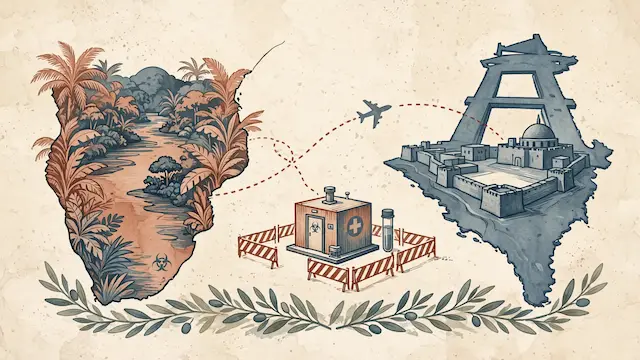
Israel's Ministry of Health is investigating a suspected case of Ebola, marking the first such concern in the country. The alert was triggered by a report of an individual who developed a fever shortly after returning from the Democratic Republic of Congo. Currently, it is only a suspicion, with laboratory test results expected in the coming days.
The individual is being treated in isolation at Hadassah Ein Kerem Medical Center in Jerusalem, one of the designated facilities for high-risk infectious diseases. The Ministry has also completed an epidemiological investigation to identify potential contacts. Those not contacted by the Ministry are advised they do not need to take any action.
Health officials emphasized that Ebola is not airborne but transmitted through direct contact with an infected person showing symptoms, or via bodily fluids. The Ministry has been monitoring the global situation, particularly the recent Ebola outbreak in Congo, and has prepared for various scenarios.
Preparations have included distributing guidelines to medical teams and hospitals, acquiring specialized protective equipment, and establishing mechanisms for early detection of travelers returning from affected areas and for laboratory identification of the virus. The Ministry advises against non-essential travel to active outbreak zones like the Democratic Republic of Congo and recommends travelers to these regions consult travel clinics.
Individuals returning from Congo who develop fever or unusual symptoms within 21 days of their stay are urged to self-isolate, avoid contact with others, and call the "Kol HaBriut" health hotline at *5400, mentioning their travel to an affected area at the start of the call. The Ministry stressed that no confirmed cases have been diagnosed in Israel to date and pledged to keep the public and medical teams updated.
Mentioned
The same event, reported separately by each outlet. Open a few to compare what different newsrooms emphasize — and what they leave out.
Centre 5Right 4Haredi 2Arab 3Other 4