Poll: Ben-Gvir Could Lose Quarter of Voters if He Unites with Smotrich
Translated & summarized from Channel 13 by baba
A new poll indicates that Itamar Ben-Gvir's Otzma Yehudit party could lose up to a quarter of its voters if it merges with Bezalel Smotrich's Religious Zionism. The survey also shows a tie between the two major political blocs in Israel, each projected to win 53 seats.
The story in 5 lines · by baba
- Ben-Gvir may lose 24% of voters if he unites with Smotrich.
- A new poll shows a tie between the Netanyahu and Gantz blocs with 53 seats each.
- Voter turnout certainty is high across all blocs.
- Coalition voters fear opposition government formation.
- Change bloc voters fear a Netanyahu government.
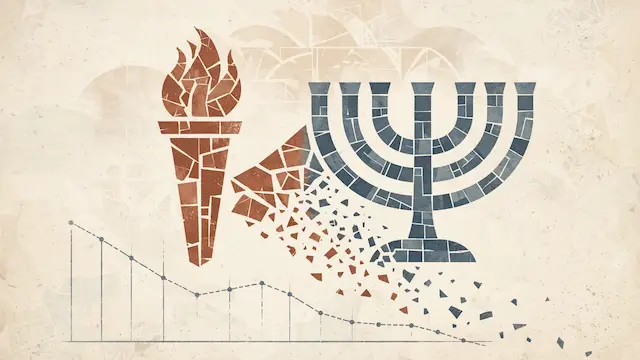
With three days remaining until the deadline for party list submissions, potential electoral alliances are a major focus. Prime Minister Benjamin Netanyahu is reportedly working to unite Itamar Ben-Gvir's Otzma Yehudit party with Bezalel Smotrich's Religious Zionism.
A News 13 poll released Friday suggests that if such a union occurs, 73% of voters would support the combined list. However, the poll indicates that 18% of voters would defect to other parties within the bloc, 3% would vote for parties outside the bloc, and 6% are undecided.
Specifically among Ben-Gvir's current supporters, only 63% would vote for a unified list, a figure described as low. A significant 24% of his voters would switch to another party, indicating Ben-Gvir could lose a substantial portion of his base.
Meanwhile, parties in the "change bloc" are also considering mergers to avoid wasting votes. A poll of potential voters for a joint list of Benny Gantz's National Unity party and Gideon Sa'ar's New Hope party showed it would garner fewer mandates than if they ran separately. In that scenario, 76% of their combined voters would remain loyal, 10% would move to other parties in the bloc, and 3% would vote for the coalition bloc.
The poll also surveyed voter anxieties. 66% of coalition bloc voters expressed strong fear or concern about the opposition bloc forming a government, while 53% of change bloc voters fear a Netanyahu-led government. Among Arab party voters, 19% expressed strong fear of a Netanyahu government, with another 24% concerned.
Regarding voter turnout certainty, 74% of all voters are sure they will vote, with 15% likely to vote. Among change bloc voters, 82% are certain to vote, compared to 77% of coalition voters and 75% of Arab party voters.
Finally, the poll revealed a dramatic tie between the two major blocs, with both the Netanyahu bloc and the Gantz bloc projected to receive 53 mandates.
Mentioned
The same event, reported separately by each outlet. Open a few to compare what different newsrooms emphasize — and what they leave out.
Centre 2Haredi 1Arab 2Other 3







Not the same event — other stories that share this one’s people, places, or theme: background, reactions, and follow-ups.