developing· Economy· Updated
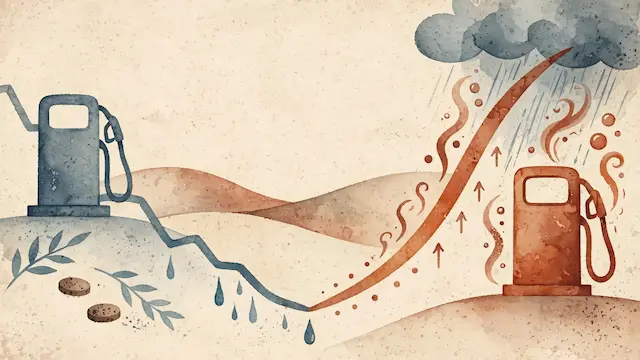
Fuel Prices Set to Drop, Then Rise Significantly Without Tax Change
The maximum price for a liter of 95-octane self-service gasoline in Israel will decrease by 42 agorot to NIS 7.35 at midnight between Saturday, October 31, and Sunday, November 1, 2026. In Eilat, where VAT does not apply, the price will drop by 35 agorot to NIS 6.23 per liter. The surcharge for full service remains unchanged at 26 agorot per liter.
7 newsrooms · 2 languages · since




What happened
- 01Fuel prices in Israel will drop by 42 agorot to NIS 7.35 per liter at midnight on Sunday, November 1, 2026.
- 02In Eilat, the price of 95-octane gasoline will decrease by 35 agorot to NIS 6.23 per liter.
- 03The price reduction is driven by a 13.19% drop in international fuel costs, offsetting a 2.02% rise in the dollar.
- 04Prices could surge by a full shekel to NIS 8.35 per liter on November 5 if temporary tax decrees expire.
- 05The temporary tax decrees signed by Finance Minister Bezalel Smotrich before the elections are set to expire on November 4.
- 06Extending the tax reduction decrees would result in a monthly government revenue loss of about 300 million shekels.
- 07The surcharge for full service at gas stations will remain unchanged at 26 agorot per liter.
This reduction is primarily driven by a 13.19% drop in international gasoline prices, which offset a 2.02% rise in the US dollar exchange rate against the shekel. Lower international prices accounted for 36 agorot of the decrease, while a reduction in Value Added Tax (VAT) contributed an additional six agorot. Currently, taxes make up about 53% of the consumer price, with excise tax at 38% and VAT at 15%.
However, the price drop may last only five days. The Ministry of Energy and Infrastructure warned that if temporary tax reduction decrees are not extended, they will expire on the night of November 4. Consequently, the price of gasoline is projected to surge by a full shekel to NIS 8.35 per liter on November 5, and to NIS 7.07 in Eilat.
Finance Minister Bezalel Smotrich had signed the tax reduction decrees in the two months preceding the elections. Extending these decrees represents a monthly tax revenue loss of approximately 300 million shekels. The Finance Minister's office has begun efforts to extend the orders, which is legally permissible now that the elections have concluded.
Summarized by baba from the reports of 7 newsrooms. Updated
Latest report: Ynetnews. Read Ynetnews’s original
The coverage
7 newsrooms on this story
Who covered it
- LeftNone
- Centre3
- Right1
- Haredi1
- ArabNone
- Other2

How it broke
How the headlines differ
Fuel Prices Set to Drop, Then Rise Significantly Without Tax Change



