
Fuel Prices Drop in Israel, But May Spike Soon
Translated & summarized from Ice by baba
Fuel prices in Israel are decreasing to 7.35 shekels per liter starting November 1st, a drop of 42 agorot. This reduction is due to lower international fuel costs, but prices could jump to 8.35 shekels on November 5th if a special tax order expires. The current price drop is largely influenced by a significant fall in global fuel prices, partially offset by a weaker shekel. Meanwhile, industrial fuel prices have increased substantially.
The story in 6 lines · by baba
- Israeli fuel prices will drop to 7.35 shekels per liter starting November 1st.
- The price reduction is due to a 13.19% decrease in international fuel costs.
- Prices may rise to 8.35 shekels on November 5th if tax relief expires.
- Eilat will see prices drop to 6.23 shekels per liter.
- Industrial fuel oil and asphalt prices have significantly increased.
- Taxes constitute a major portion of the final fuel price in Israel.
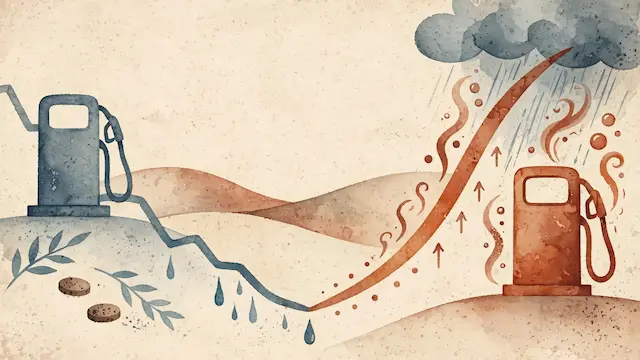
Drivers in Israel will see a significant decrease in fuel prices starting November 1st, with the maximum price for a liter of 95-octane gasoline set at 7.35 shekels for self-service stations. This represents a drop of 42 agorot from the previous month, potentially saving drivers tens of shekels on a full tank. In the southern city of Eilat, which is exempt from VAT, the price will be 6.23 shekels per liter, a decrease of 35 agorot. However, this relief may be short-lived. The Ministry of Energy and Infrastructure has warned that if a special excise tax order is not renewed, the price could surge back up to 8.35 shekels per liter nationwide and 7.07 shekels in Eilat starting November 5th. The current price reduction is primarily attributed to a sharp 13.19% fall in international fuel prices, which offset a 2.02% rise in the dollar's exchange rate. The international component, known as CIF, makes up only 38% of the final price at the pump, while excise taxes constitute another 38%. Value-added tax (VAT) adds 15%, and marketing costs account for 9%, highlighting the significant impact of taxes on fuel costs. Meanwhile, industrial sectors are facing increased costs, with prices for fuel oil and asphalt at refineries rising between 7.73% and 14.65%. The public and industries are now awaiting a decision from the Treasury regarding the extension of the tax relief.
The same event, reported separately by each outlet. Open a few to compare what different newsrooms emphasize — and what they leave out.
Centre 3Right 1Haredi 2Other 3









Not the same event — other stories that share this one’s people, places, or theme: background, reactions, and follow-ups.


