Full coverage· Politics· Updated
Israel's High Court Blocks Digital Voter Tracking by Parties
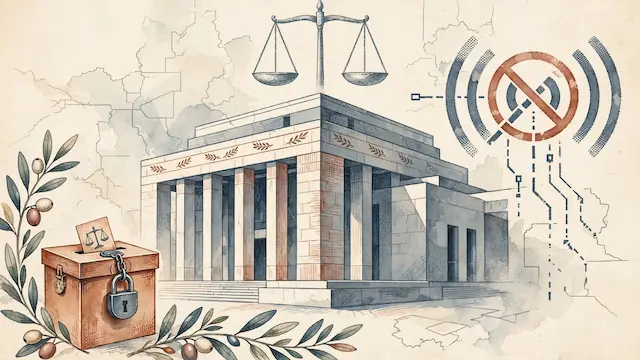
On Thursday, October 22, 2026, Israel's Supreme Court ruled in a 2-1 decision that political parties are prohibited from digitally counting and transmitting real-time voter turnout numbers from polling stations to their headquarters. The ruling, which makes a conditional order absolute, expands a previous ban on reporting the identities of specific voters who have cast ballots. Justices Khaled Kabub and Ruth Ronen formed the majority, while Justice David Mintz dissented.
8 newsrooms · 4 languages · since




What happened
- 01Israel's Supreme Court banned political parties from digitally counting and transmitting real-time voter turnout numbers from polling stations.
- 02The 2-1 majority decision by Justices Khaled Kabub and Ruth Ronen expands a previous ban on sharing identifying voter data.
- 03The ruling accepted petitions from the Israel Democracy Guard and the Movement for Quality Government in Israel.
- 04The decision overrides a prior clarification by the Central Elections Committee's acting Director General, Din Livneh, which permitted numerical tracking.
- 05The court cited a lack of explicit legal authorization for the data transfers and raised voter privacy concerns.
- 06The Likud party strongly opposed the restriction, arguing it hinders efforts to mobilize voters on election day.
- 07United Torah Judaism plans to bypass the ruling by tracking voters outside polling stations and using dedicated reporting tents.
The decision accepted petitions filed by the Israel Democracy Guard and the Movement for Quality Government in Israel. The legal challenges targeted a clarification issued by Din Livneh, the acting Director General of the Central Elections Committee, which had permitted party representatives to use smartphones and digital means to transmit purely numerical, non-identifying voter counts. The majority justices ruled that election committee members and observers, acting in public roles, lack explicit legal authorization to transmit this data, and cited voter privacy concerns. This ruling aligns with the position of Committee Chairman Justice Noam Solberg, rejecting the committee's plenary view.
The decision restricts the ability of political parties to monitor turnout and mobilize supporters on election day. The Likud party, which had supported the practice, strongly criticized the ruling, accusing the court of interfering in the electoral process. In response to the ban, United Torah Judaism is planning alternative tracking methods, including registering voters outside the sterile zones of polling stations and setting up dedicated tents staffed by students to collect post-vote reports.
Summarized by baba from the reports of 8 newsrooms. Updated
Latest report: The Jerusalem Post. Read The Jerusalem Post’s original
The coverage
8 newsrooms on this story
Who covered it
- LeftNone
- Centre2
- Right1
- Haredi2
- Arab2
- Other1


How it broke
How the headlines differ
Israel's High Court Blocks Digital Voter Tracking by Parties



