developing· Economy· Updated
Israel Faces Soaring Bread Prices as Wheat Suppliers Dwindle
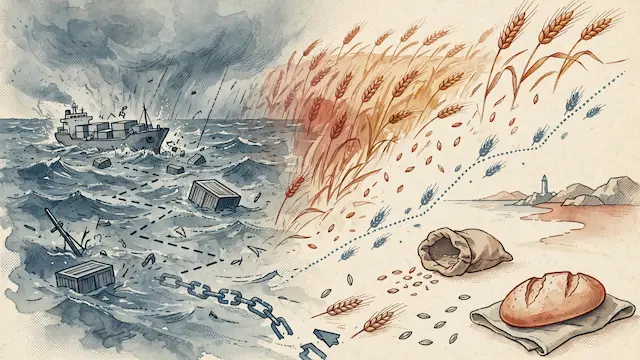
Flour prices in Israel are set to rise by 10% to 15% starting Sunday, November 1, 2026, a change that is expected to drive up the cost of bread and pastries. The price hike is driven by major logistical disruptions in the Black Sea region caused by the escalation of the Russia-Ukraine war, which has severely impacted wheat and barley shipments to Israel.
3 newsrooms · 2 languages · since


What happened
- 01Flour prices in Israel will increase by 10% to 15% starting Sunday, November 1, 2026, leading to higher costs for bread and pastries.
- 02The price hike is caused by Black Sea logistical disruptions and shipping attacks linked to the Russia-Ukraine war.
- 03Russian suppliers terminated agreements with Israeli mills after attacks on port infrastructure and cargo ships carrying wheat and barley.
- 04Israeli mills are shifting to European sources, purchasing wheat from Poland and Western Europe at prices 35% to 40% higher.
- 05The Bar-Rav mill, which supplies Osem and Bonjour, announced an 11% price increase starting November 1.
- 06The Shtibel-Dagan mill is negotiating a 10% to 15% price hike with its customers.
- 07Disagreements and challenges surrounding import certifications from kashrut authorities are further complicating wheat imports and adding to costs.
Following Ukrainian attacks on Russian ports and merchant vessels in the Black Sea, Russian suppliers have terminated existing agreements due to their inability to fulfill obligations. Prior to the war, Ukraine was Israel's primary grain supplier, but it has since redirected its exports to Europe, while Russia had more recently become the main exporter to Israel. To prevent raw material shortages, Israeli mills are urgently turning to more expensive alternative sources in Poland and Western Europe, where grain costs are 35% to 40% higher.
Among the major domestic processors, the Bar-Rav mill, also referred to as Bar-Raf, has already notified its customers, which include Osem and the Bonjour chain, of an 11% price increase. Another major mill, Shtibel-Dagan, is currently negotiating a 10% to 15% hike. In addition to the rising cost of European grain, transportation, and labor, Israeli mills are facing further complications and added costs due to disagreements and challenges regarding import certifications from kashrut authorities.
Summarized by baba from the reports of 3 newsrooms. Updated
Latest report: Cursorinfo. Read Cursorinfo’s originalThe coverage
3 newsrooms on this story
Who covered it
- LeftNone
- CentreNone
- RightNone
- HarediNone
- Arab1
- Other2

