Full coverage· Politics· Updated
Israel's October 2026 Elections: A Crossroads for Governance and Arab Representation
Israel is preparing for its 26th Knesset elections on Tuesday, October 27, 2026, amid deep political, security, and social crises following the October 7 attacks. A total of 35 parties are competing for votes, with polls indicating a tight race for Prime Minister Benjamin Netanyahu and his Likud party. The election raises critical questions about the future of governance, security responsibility, and the role of Arab citizens, with Arab parties like the Joint List and United Arab List facing challenges in coordinating to influence policy.
4 newsrooms · 3 languages · since



What happened
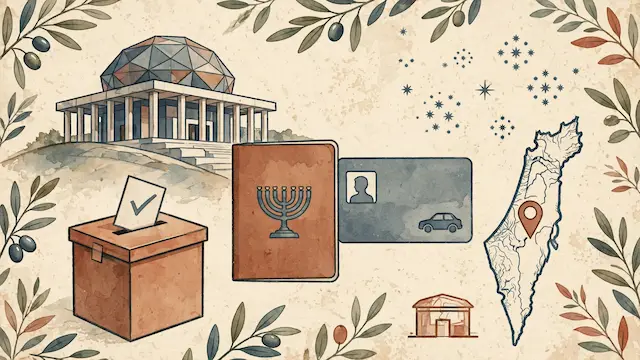
- 01Israel's 26th Knesset elections are scheduled for Tuesday, October 27, 2026, with 35 parties competing for votes.
- 02A total of 7,331,981 citizens are eligible to vote, marking an increase of 543,177 registered voters since 2022.
- 03Voting will take place across 12,018 polling stations, including 6,208 accessible stations and five for October 7 evacuees.
- 04Polling stations will generally open from 7:00 AM to 10:00 PM, with smaller communities closing at 8:00 PM.
- 05Voters must present valid photo identification, such as an ID card, passport, driver's license, or military ID.
- 06Public transportation will be free on election day on Israel Railways and intercity buses to facilitate voting.
- 07Arab parties, the Joint List and United Arab List, face challenges in coordinating to influence policy and achieve change.
There are 7,331,981 citizens eligible to vote, representing approximately 71.1 percent of the total population and an increase of 543,177 registered voters since the 2022 election. Any Israeli citizen born on November 14, 2008, or earlier, is eligible to cast a ballot. Voting will take place across 12,018 polling stations nationwide, which will generally be open from 7:00 AM to 10:00 PM, with shorter hours of 8:00 AM to 8:00 PM in smaller communities.
Special provisions have been made for accessibility, including 6,208 accessible stations, 250 in hospitals, 55 in prisons, and five designated for individuals evacuated from their homes following the October 7 attacks. Voters must present valid photo identification, such as an ID card, passport, driver's license, or military ID, and expired ID cards are also accepted. Public transportation will be free on election day on Israel Railways and intercity buses.
Summarized by baba from the reports of 4 newsrooms. Updated
Latest report: Alarab. Read Alarab’s originalThe coverage
4 newsrooms on this story
Who covered it
- Left1
- Centre1
- RightNone
- HarediNone
- Arab1
- Other1
How it broke
How the headlines differ
Israel's October 2026 Elections: A Crossroads for Governance and Arab Representation


