
Tensions Escalate in South Lebanon Amid Fears of Renewed War and Negotiation Collapse
Translated & summarized from N12 by baba
Following a serious attack on Israeli soldiers in southern Lebanon, the IDF launched extensive strikes against Hezbollah targets. The U.S. blames Hezbollah for obstructing Lebanon's recovery and peace efforts. Lebanese sources warn Hezbollah is escalating to disrupt Israel-Lebanon negotiations, while Israel killed two senior Hezbollah commanders in retaliation. The situation raises fears of renewed war and negotiation collapse.
The story in 6 lines · by baba
- IDF launched broad strikes after three soldiers were seriously wounded in southern Lebanon.
- US blames Hezbollah for Israeli presence and economic stagnation in Lebanon.
- Hezbollah reportedly escalates military actions to sabotage Israel-Lebanon talks.
- Netanyahu seeks military gains in south Lebanon ahead of elections.
- Hezbollah-linked analyst denies escalation relates to peace negotiations.
- Israel killed two senior Hezbollah commanders in retaliation for ceasefire breach.
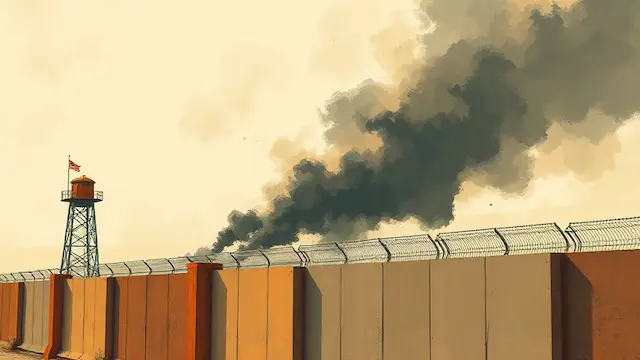
A sharp escalation of violence in southern Lebanon has raised concerns about the potential for renewed conflict and the collapse of ongoing negotiations between Israel and Lebanon. The recent flare-up followed a serious incident in the Ali Al-Taher ridge area where three Israeli soldiers were severely wounded, prompting the Israel Defense Forces (IDF) to launch extensive retaliatory strikes described in Lebanon as a "belt of fire."
The United States State Department spokesperson blamed Hezbollah for the Israeli military presence in Lebanese territory, labeling the group as the main obstacle to Lebanon's economic recovery. The U.S. expects its military to complete clearing operations in pilot zones and continues to support the trilateral framework agreement aimed at regional stability.
A Lebanese political source told the newspaper Nidaa Al-Watan that Hezbollah is deliberately escalating military actions to sabotage direct negotiations between Jerusalem and Beirut, awaiting a green light from Iran amid tensions surrounding the Washington agreement. The source also suggested that Israeli Prime Minister Benjamin Netanyahu seeks a military achievement on the southern front to bolster his position ahead of upcoming elections and to pressure Lebanon during stalled talks, which Israel demands include Hezbollah's disarmament.
Hezbollah-affiliated Lebanese commentator Khalil Nasrallah told Al-Arabi Al-Jadid that Israel is slowly trying to tighten control over Ali Al-Taher, aiming to impose a retaliatory equation for any attacks on its forces. Nasrallah denied any connection between the escalation and the Rome negotiations or the framework agreement, asserting that Lebanese negotiators already view Hezbollah as the problem and that Israel does not need to pressure them further.
In response to Hezbollah's breach of the ceasefire that injured three IDF commandos, Israel killed two senior Hezbollah commanders: Abu Hassan Alaa, leader of Hezbollah's "Badr" unit, near Deir Al-Zahrani, and Ali Samir Al-Hajj Hassan, a battalion commander in the "Radwan" unit, in his base in Ansar village. The IDF emphasized that several other militants involved in planning terrorist attacks against Israeli forces were also eliminated.
The ongoing escalation in southern Lebanon thus threatens to derail the fragile peace process and risks opening the door to a destructive new war in the region.
Mentioned
The same event, reported separately by each outlet. Open a few to compare what different newsrooms emphasize — and what they leave out.
Centre 2


Not the same event — other stories that share this one’s people, places, or theme: background, reactions, and follow-ups.
