
Tensions Escalate in South Lebanon Amid Fears of Renewed War and Negotiation Collapse
Translated & summarized from Mako by baba
Following an attack injuring three Israeli soldiers in southern Lebanon, the IDF launched extensive strikes against Hezbollah, killing two senior commanders. The escalation raises fears of renewed war and threatens ongoing Israel-Lebanon negotiations, with Hezbollah accused of sabotaging peace efforts amid U.S. and Iranian involvement.
The story in 6 lines · by baba
- IDF retaliates with extensive strikes after three soldiers wounded in southern Lebanon incident.
- U.S. blames Hezbollah for Israeli presence and economic stagnation in Lebanon.
- Hezbollah reportedly intensifies military actions to disrupt Israel-Lebanon peace talks.
- Israeli PM Netanyahu seeks military gains to strengthen election prospects and pressure Lebanon.
- Two senior Hezbollah commanders killed by Israel in response to ceasefire violations.
- Lebanese analysts say escalation risks collapsing negotiations and sparking renewed war.
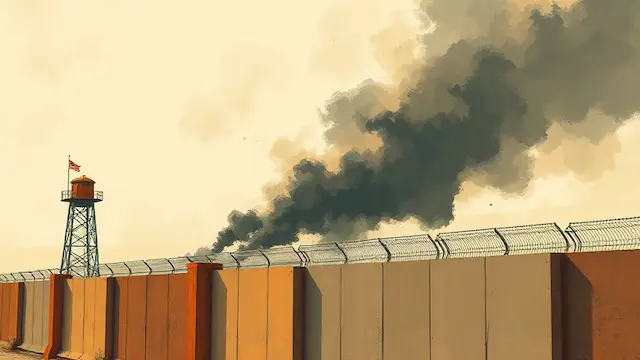
A sharp escalation of violence in southern Lebanon has raised concerns about the potential for renewed conflict and the collapse of ongoing negotiations between Israel and Lebanon. The recent surge in hostilities followed an incident in the Ali Al-Taher ridge area where three Israeli soldiers were seriously injured, prompting the Israel Defense Forces (IDF) to launch extensive retaliatory strikes described in Lebanon as a "belt of fire."
The escalation is part of a broader struggle over the rules of engagement in southern Lebanon, with Beirut officials warning that the situation could jeopardize peace talks and open the door to a destructive war. A spokesperson for the U.S. State Department accused Hezbollah of being responsible for Israel's military presence in Lebanese territory and identified the group as the main obstacle to Lebanon's economic recovery. The U.S. supports the trilateral framework agreement aimed at regional stability and expects the American military to complete clearing operations in pilot zones.
A Lebanese political source told the newspaper Nidaa Al-Watan that Hezbollah is deliberately increasing military actions to sabotage direct negotiations between Jerusalem and Beirut, awaiting a green light from Iran amid tensions surrounding the U.S. agreement. The source also suggested that Israeli Prime Minister Benjamin Netanyahu seeks a military achievement on the southern front to bolster his prospects in upcoming elections and to pressure Lebanon in stalled talks, which Israel demands include Hezbollah's disarmament.
Hezbollah-affiliated Lebanese commentator Khalil Nasrallah told Al-Araby Al-Jadeed that Israel is trying to tighten control over the Ali Al-Taher area and impose a retaliatory equation for any attacks on its forces. Nasrallah denied any connection between the escalation and the Rome negotiations or the framework agreement, asserting that Lebanese negotiators already view Hezbollah as the problem and that Israel does not need to pressure them further.
In response to Hezbollah's violations of the ceasefire and the injury of three IDF commandos, Israel killed two senior Hezbollah commanders: Abu Hassan Alaa, a senior "Badr" unit commander, near Deir Al-Zahrani, and Ali Samir Al-Hajj Hassan, a battalion commander of the "Radwan" unit, in his base in Ansar village. The IDF emphasized that several other militants involved in planning attacks against Israeli forces were also eliminated during these operations.
Mentioned

