
Iran Displays Underground Facility Amid Tensions, Rejects US Terms
Translated & summarized from Vesty by baba
Iran displayed an underground "missile city" on November 21, 2026, with military officials threatening force and improved capabilities. Foreign Minister Abbas Araghchi stated Iran would open the Strait of Hormuz after U.S. obligations are met. U.S. President Donald Trump rejected Iran's proposed terms for an agreement on November 20, 2026. The incidents occurred amid reports of tanker explosions in the Strait of Hormuz and Iran's claim of downing a U.S. drone.
The story in 5 lines · by baba
- Iran revealed an underground "missile city" on November 21, 2026, with officials vowing to use force.
- Foreign Minister Abbas Araghchi said Iran would open the Strait of Hormuz after U.S. obligations are met.
- President Donald Trump rejected Iran's proposed terms for an agreement on November 20, 2026.
- Iran claimed to have shot down a U.S. MQ-9 drone in the Strait of Hormuz.
- Two oil tankers reportedly exploded and caught fire in the southern Strait of Hormuz.
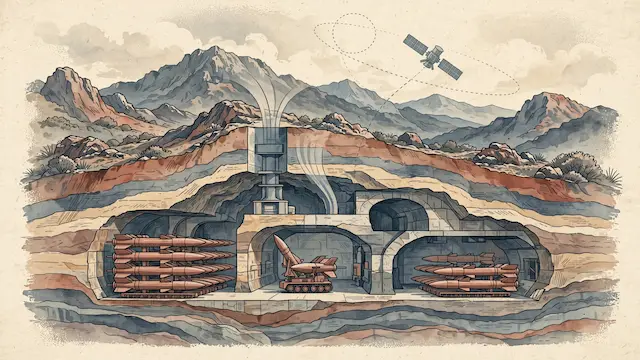
Iran showcased an underground "missile city" on Saturday, November 21, 2026, amid heightened tensions and threats of force. The commander of the Air Force of the Islamic Revolutionary Guard Corps (IRGC), Majid Mousavi, stated that his forces have significantly improved their capabilities and are ready to act on orders. IRGC Commander Ahmad Vahidi also reportedly threatened "complete defeat" to adversaries from the same site. This follows a similar demonstration of an underground facility earlier in November, with the purpose of the current display unclear, potentially signaling military readiness or a message to Washington and Israel.
Meanwhile, Iranian Foreign Minister Abbas Araghchi announced that Iran would open the Strait of Hormuz once the U.S. fulfills certain obligations. This proposal, originally presented in September 2026, could see the timeline for opening the strait reduced from two days to as little as two hours if Iran's demands are met. Araghchi emphasized that Washington must first meet its commitments before Iran opens the strait, paving the way for final agreement negotiations. He also outlined two "red lines" regarding nuclear materials, stating they must remain within Iran and be used according to its needs. Araghchi described the current situation as "neither war nor peace" and noted that mediators continue to relay messages between Tehran and Washington, while Iran discusses economic matters with regional countries, learning not to rely on external powers for security.
U.S. President Donald Trump, speaking on November 20, 2026, stated that Iran desires an agreement but finds its proposed terms unacceptable. Trump linked the ongoing settlement of issues with Iran to the record-breaking decline in gasoline prices. He also reiterated discussions at a recent summit in China aimed at preventing Iran from acquiring nuclear weapons, dismissing rumors of a "dirty bomb" as unsubstantiated but vowing U.S. action if confirmed. Trump had previously, on November 12, 2026, instructed Vice President Vance to cease negotiations, citing that the U.S. already possessed "Iranian money and the Strait."
In related maritime incidents, the IRGC Navy reported the detonation of an oil tanker in the Strait of Hormuz, claiming it attempted to pass through an unauthorized route with U.S. military support. The IRGC released footage of the explosion and warned of monitoring vessels violating rules. Iran's Tasnim news agency reported two explosions and fires on tankers in the southern part of the strait, suggesting U.S. military involvement in aiding unauthorized cargo and fuel smuggling. Tasnim, citing the IRGC, linked the explosions to naval mines and claimed Iranian air defense shot down an American MQ-9 drone providing aerial cover. Amidst these events, British swimmer Lewis Pugh undertook a swim in parts of the Strait of Hormuz to raise awareness of potential war-related environmental consequences.
Mentioned
The same event, reported separately by each outlet. Open a few to compare what different newsrooms emphasize — and what they leave out.
Centre 1Right 1Haredi 2Arab 1Other 1







Not the same event — other stories that share this one’s people, places, or theme: background, reactions, and follow-ups.

