
Satellite Images Reveal Iran's New Underground Missile Base Near Isfahan
Translated & summarized from Mako by baba
Satellite images reveal Iran is constructing a new underground missile base for the IRGC north of Isfahan, potentially reaching depths of 200 meters. Construction began in January 2026, and the facility is designed with five tunnel entrances. Meanwhile, Mossad Director Roman Gofman presented intelligence to US officials suggesting accelerated Iranian chemical weapons development, though disagreements exist between Israel and the US on the threat's immediacy.
The story in 5 lines · by baba
- Satellite images show Iran building a new underground IRGC missile base north of Isfahan.
- The new Iranian facility features five tunnel entrances and may reach depths of 200 meters.
- Construction on the underground complex reportedly began in January 2026.
- Mossad Director Gofman presented intelligence on Iranian chemical weapons development to US officials.
- Disagreements exist between Israel and the US regarding the immediacy of Iran's chemical weapons threat.
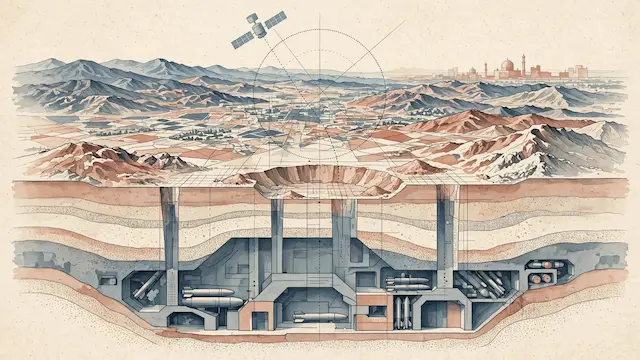
Satellite imagery has revealed the construction of a new underground facility north of Isfahan, Iran, which is believed to be a missile base for the Islamic Revolutionary Guard Corps (IRGC). The site was first identified by Israeli OSINT researcher Ben Zion Makales, and later analyzed by researcher Sam Layyer in a report published on Arms Control Wonk. Layyer's analysis, based on imagery from Planet Labs, suggests the facility is a new missile base.
Construction on the complex reportedly began in January 2026. The project includes new access roads, staging areas, and support structures. A small, berm-enclosed area is also present, likely for storing explosives used in tunnel excavation. The facility is expected to feature five entrances to underground tunnels, with construction ongoing and activity visible at tunnel entrances and excavation sites.
Initial excavation efforts on the western side of a nearby mountain were abandoned after a few months, possibly due to geological conditions. The excavated material from these abandoned tunnels was reddish, differing from the gray and gold hues seen at the active tunnel sites. Digital elevation maps suggest the tunnels could reach depths of approximately 150 meters, potentially extending to 200 meters or more into the mountain. For comparison, Iran's Fordow uranium enrichment facility is estimated to be between 80 to 100 meters deep.
Layyer estimates the new complex is an IRGC missile base due to its location and tunnel entrance characteristics, which resemble other Iranian missile bases. However, he notes that confirmation will require the construction of above-ground infrastructure typical of missile bases, such as testing and maintenance facilities. If such structures are not built, the facility's purpose may need reevaluation.
In separate but related developments, Mossad Director Roman Gofman met with CIA Director John Ratcliffe and White House envoy Steve Witkoff in the US last week. Gofman reportedly presented new intelligence suggesting accelerated Iranian activity in developing chemical weapons, including tests. A source familiar with the matter stated Gofman argued that inaction by the US and Israel now would necessitate military action later under more difficult conditions. While US officials confirmed President Trump was briefed on this intelligence, there is reportedly disagreement between Israeli and US governments regarding the immediacy of the chemical weapons threat and Iran's capability to weaponize missiles or drones. Some Trump administration officials have expressed skepticism, suggesting Israel's claims might be politically motivated.
Mentioned
The same event, reported separately by each outlet. Open a few to compare what different newsrooms emphasize — and what they leave out.
Coverage from Mako

Not the same event — other stories that share this one’s people, places, or theme: background, reactions, and follow-ups.

