
Dollar and Euro Hit One-Year Highs as Shekel Weakens
Translated & summarized from Behadrei Haredim by baba
The Israeli shekel weakened significantly on Thursday, with the U.S. dollar reaching a one-year high of around 3.30 shekels and the euro also hitting a yearly peak. Domestic political instability, security tensions with Iran, and global interest rate hikes by the U.S. Federal Reserve are contributing factors. Analysts warn the dollar could reach 3.35-3.40 shekels if the trend continues, while the Bank of Israel faces a decision on interest rates amid conflicting inflation and currency pressures.
The story in 6 lines · by baba
- The U.S. dollar reached a one-year high of approximately 3.30 shekels on Thursday.
- The euro also hit a one-year peak, trading around 3.62 shekels against the Israeli currency.
- Domestic political uncertainty and security tensions with Iran are pressuring the shekel.
- U.S. Federal Reserve interest rate hikes and global AI investments support the dollar.
- Israeli institutional investors buying foreign currency to hedge portfolios exacerbate shekel weakness.
- The Bank of Israel's upcoming interest rate decision is keenly awaited by the market.
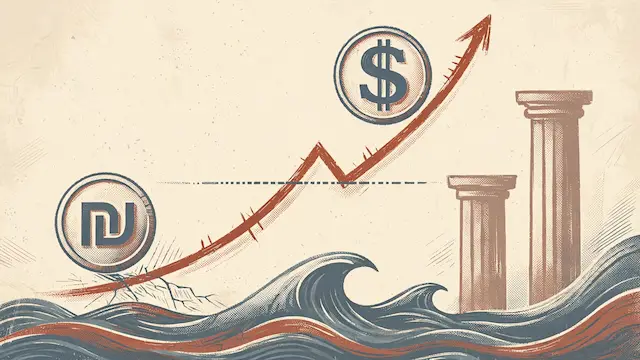
The Israeli shekel continued its decline on Thursday, with the U.S. dollar reaching its highest level in a year, trading around 3.30 shekels. This marks a significant increase of about 18%, or half a shekel, from its low point of 2.80 shekels six months ago. The euro also strengthened to a yearly high, trading near 3.62 shekels. Analysts suggest that a substantial portion of the shekel's current weakness stems from domestic factors, rather than solely from global dollar strength.
Globally, the dollar has been bolstered by expectations of further interest rate hikes from the U.S. Federal Reserve. Minutes from the Fed's latest meeting indicated that most members anticipate additional rate increases. Fed Governor Christopher Waller reportedly advocated for a 0.5% rate hike in December or a faster pace of increases in 2027. The interest rate differential between the U.S. (3.75%-4%) and Israel (3.25%) is attracting demand for the dollar. Major global banks like Barclays, Deutsche Bank, and Standard Chartered predict that investments in artificial intelligence will continue to support the dollar through 2027, potentially offering higher returns.
Domestically, investor concerns are mounting over political instability and the possibility of new elections. This is compounded by security tensions with Iran, with reports suggesting the U.S. is considering new strikes due to Iran's alleged efforts to rebuild its missile stockpiles. Declining stock markets worldwide, including Wall Street and Israeli exchanges, are also contributing to the pressure on the shekel. When foreign stock markets fall, Israeli institutional investors, such as pension funds and insurance companies, buy foreign currency to hedge their portfolios, further increasing demand for dollars and weakening the shekel.
The market is now focused on the Bank of Israel's upcoming interest rate decision. While a recent drop in annual inflation to 1.1% in October might suggest a rate cut, the weakening shekel could drive up import costs and reignite inflation. This dilemma may lead the Bank of Israel to maintain its current interest rate, with some analysts predicting it will remain between 3%-3.25% for the next six months. Forecasters warn that if the current trend persists, the dollar could rise to 3.35-3.40 shekels.
Mentioned
The same event, reported separately by each outlet. Open a few to compare what different newsrooms emphasize — and what they leave out.
Centre 2Haredi 1Arab 1Other 1





Not the same event — other stories that share this one’s people, places, or theme: background, reactions, and follow-ups.



