
Arab Lawmakers' Anthem Walkout Highlights Identity Rift
Translated & summarized from Arutz Sheva by baba
Arab members of the Knesset walked out during Israel's national anthem after being sworn in, sparking debate about their commitment to the state's identity and sovereignty. The act is seen by some as a calculated political move, reflecting a broader worldview where participation in state institutions is a means to gain power without accepting Israel's national definition. The article also addresses rising organized crime and a disturbing normalization of property damage within parts of the Arab community, urging Arab leadership to confront these issues and demanding that Arab citizens recognize Israel's legitimacy and laws.
The story in 6 lines · by baba
- Arab lawmakers walked out during Israel's national anthem after being sworn into the Knesset.
- The act is seen as a political gesture rejecting Israel's identity and sovereignty.
- MK Mansour Abbas remained standing, highlighting internal diversity within Arab political leadership.
- The article links the anthem protest to broader issues of organized crime and societal norms.
- Arab leadership is urged to confront these issues and demand recognition of Israel's legitimacy.
- Jewish society is cautioned against confusing tolerance with weakness.
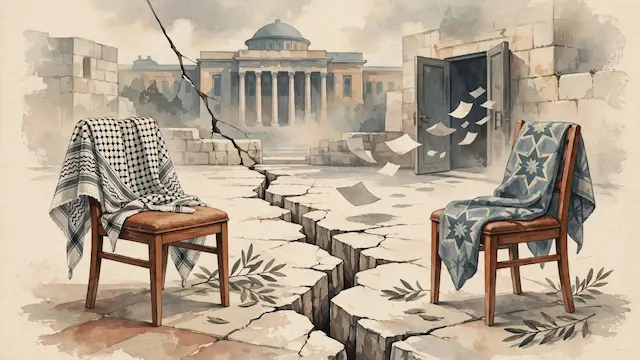
Several Arab members of the Knesset walked out of the plenum during the singing of Israel's national anthem, "Hatikvah," following their swearing-in ceremony. This act is described not as a minor ritualistic event but as a manifestation of a relationship where some Arab leadership seeks the benefits of Israeli statehood while rejecting its identity, symbols, and sovereignty. The incident occurred despite lawmakers taking an oath of allegiance to fulfill their parliamentary duties within the Knesset, Israel's sovereign institution. The walkout was characterized as a calculated political gesture, witnessed by the President, Prime Minister, Supreme Court President, and Knesset Speaker. Notably, MK Mansour Abbas remained standing, indicating internal diversity within Arab political leadership, though the overall picture remains concerning.
The article questions whether the anthem protest is merely about a Jewish national symbol or reflects a broader worldview where participation in state institutions is a means to gain power and influence without accepting the state's right to define its national identity. It urges Israeli society, particularly the political left, to confront this issue. The piece suggests that within the political Islamic movement, integration into Israeli society is seen not as an end goal but as a phase toward changing the existing order, employing political, educational, and ideological means rather than solely violence.
Beyond the Knesset, the article points to a broader societal tension between parts of the Arab community and state institutions, law, and public order. It highlights organized crime, extortion, and damage to public and private property as serious issues, not just marginal phenomena. A disturbing norm has developed where intentional damage to property and infrastructure is sometimes viewed with pride, normalized through familial and social learning. This transforms criminality from a source of shame into a test of sophistication and social standing.
The piece argues that the Arab leadership cannot demand budgets, equality, representation, and political power while remaining silent when state institutions are attacked, crime organizations terrorize residents, or extremist voices question the state's legitimacy. It stresses that Jewish society must distinguish between tolerance and weakness, asserting that while a democratic state must protect minority rights, it cannot ignore those who exploit freedoms to harm it. Citizenship does not equate to loyalty to the law, and political participation does not grant immunity from public scrutiny. The article concludes that while Arab citizens are not required to sing "Hatikvah" or abandon their identity, they are legitimately expected to recognize Israel, respect its sovereignty, abide by its laws, and cease playing a double game.
The same event, reported separately by each outlet. Open a few to compare what different newsrooms emphasize — and what they leave out.
Centre 1Right 1

Not the same event — other stories that share this one’s people, places, or theme: background, reactions, and follow-ups.



