
US Air Traffic System Failure Disrupts Flights to and From Israel
Translated & summarized from Cursorinfo by baba
A major technical failure in the U.S. air traffic control system on Friday, November 13th, led to a nationwide grounding of flights, causing thousands of cancellations and delays. The disruption impacted international travel, including flights to and from Israel, with passengers at Ben Gurion Airport experiencing significant delays. The incident, attributed to outdated infrastructure, has prompted calls for a $50 billion modernization of the U.S. aviation system. Passengers are advised to check flight statuses as disruptions may persist.
The story in 6 lines · by baba
- A U.S. air traffic control system failure on November 13th caused a nationwide flight grounding and international travel disruptions.
- Thousands of flights were canceled or delayed, affecting approximately 1.5 million passengers globally.
- The incident is linked to outdated technology in the U.S. air traffic control infrastructure.
- Flights to and from Israel experienced significant delays and schedule changes.
- U.S. officials are requesting $50 billion for urgent modernization of the aviation system.
- Air traffic controller shortages exacerbate the risks of future disruptions.
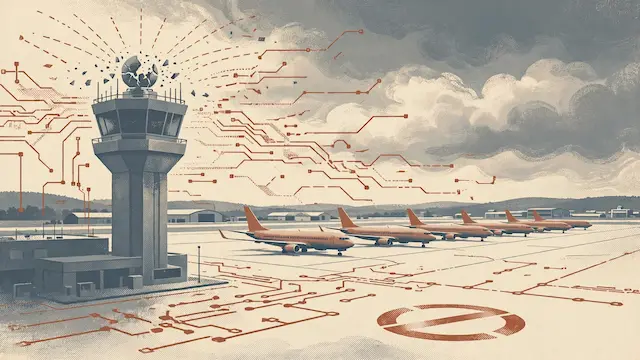
A major technical malfunction in the U.S. air traffic control system caused a four-hour nationwide grounding of flights on Friday, November 13th, leading to thousands of flight cancellations and significant disruptions to international air travel. The Federal Aviation Administration (FAA) ordered a halt to all departures at 3:54 PM Eastern Time due to critical issues with its communication systems, with restrictions lasting until 8:15 PM. This incident, described as one of the most significant air traffic disruptions in decades, affected approximately 1.5 million passengers, with estimates of 10,000 flights delayed and between 4,000 and 8,000 canceled. The preliminary economic damage is estimated in the hundreds of millions of dollars, potentially exceeding a billion dollars when considering all associated costs.
The root cause is believed to be severe problems with the outdated technological infrastructure of the U.S. air traffic control system, with some equipment dating back to the 1980s. The FAA noted unstable data transmission starting at 3:36 PM, suggesting that aging routers and network switches may have failed under load, possibly exacerbated by attempts to integrate new digital technologies with the old infrastructure. While a new AI-driven air traffic management system, SMART, was recently implemented, its developer denies any connection to the failure, and no evidence currently links it to the malfunction. U.S. authorities have ruled out cyberattacks and issues with Microsoft systems as causes.
The repercussions of the U.S. system failure quickly spread globally. Eurocontrol, at the FAA's request, temporarily restricted flights from European airports bound for the United States, impacting international routes, including those between Israel and the U.S. Passengers at Ben Gurion Airport experienced delays and schedule changes. For instance, a United Airlines flight from Newark to Tel Aviv received special permission to depart, while others had to wait. A subsequent United Airlines flight from Tel Aviv to Newark on November 14th was delayed due to the late arrival of the aircraft.
Israelis traveling within the U.S. or connecting through European hubs like London, Frankfurt, and Paris also faced significant disruptions, including domestic flight cancellations and the need to find alternative travel arrangements. Delta Air Lines offered flexible rebooking options for affected passengers on November 13th and 14th.
U.S. Secretary of Transportation Sean Duffy warned that similar malfunctions could recur without substantial upgrades. The Trump administration has requested $50 billion from Congress for aviation infrastructure modernization, adding to a previously approved $12.5 billion. The complete replacement of outdated components is estimated to cost $30-50 billion. The situation is compounded by a shortage of air traffic controllers, with over 75% of control centers experiencing staffing deficits, leading to mandatory overtime and increased risks.
This incident draws comparisons to the complete airspace closure after 9/11 and a January 2023 NOTAM system failure that also halted domestic flights. Recent near-miss incidents, including one involving an El Al flight at JFK in October, have also raised concerns about air traffic management coordination. Passengers are advised to monitor flight statuses directly with airlines, as disruptions may continue while airlines work to restore normal schedules and aircraft rotations.
Mentioned
The same event, reported separately by each outlet. Open a few to compare what different newsrooms emphasize — and what they leave out.
Centre 3Arab 1Other 3








Not the same event — other stories that share this one’s people, places, or theme: background, reactions, and follow-ups.

