
Israel Faces Dual Power Centers Amidst Government Transition
Translated & summarized from Vesty by baba
Israel is experiencing a period of dual governance with the bloc of change, led by Gadi Eisenkot, controlling the Knesset and Benjamin Netanyahu's government managing executive functions. Key committees, including finance and foreign affairs, are being contested, potentially impacting budget approvals and security oversight. The government's actions are subject to increased scrutiny and limitations due to the lack of a Knesset majority, with the situation's duration uncertain.
The story in 6 lines · by baba
- Israel faces dual power centers with the bloc of change controlling the Knesset and Benjamin Netanyahu's government managing executive functions.
- Gadi Eisenkot's bloc secured control of the Knesset's organizational committee, a key body for legislative proceedings.
- The finance committee, now led by Liran Avishar Ben-Horin, could significantly impact the government's budget approvals.
- Avigdor Lieberman is set to chair the foreign affairs and defense committee, overseeing security agencies.
- The interim government is operating under limitations imposed by the government's legal advisor and lack of Knesset majority.
- A vote on November 17 to replace Knesset Speaker Amir Ohana could shift legislative control.
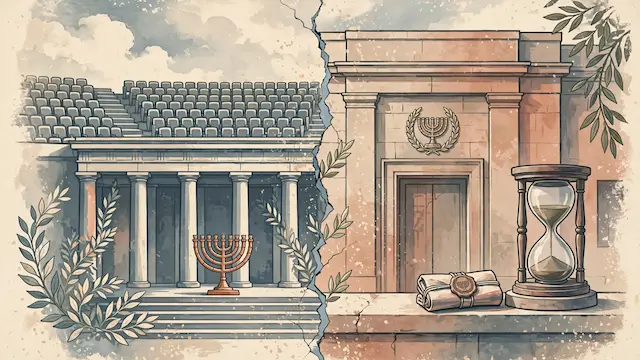
Following recent elections and the swearing-in of the 26th Knesset, Israel finds itself in a state of dual governance. The bloc advocating for change, led by Gadi Eisenkot, holds a majority in the Knesset, while Benjamin Netanyahu's camp continues to control the executive government. This division creates two distinct centers of power: the legislative branch controlled by Eisenkot's bloc and the executive branch managed by Netanyahu's government.
Ynet political commentator Amir Ettinger explained on November 13 that control of the Knesset dictates the legislative agenda, committee composition, and budget approval pace. Conversely, control of the government allows for the management of ministries and the defense establishment, albeit with the requirement to justify non-routine actions and undergo scrutiny from the government's legal advisor, Gali Baharav-Miara, who has urged restraint from the interim government.
Eisenkot's bloc has secured an initial victory by establishing an organizational committee, crucial for controlling the Knesset's proceedings, including the formation of temporary committees like finance and foreign affairs and defense. However, the current coalition has delayed the convening of these committees, leveraging Amir Ohana's continued tenure as Knesset Speaker. A key vote on November 17 to replace Ohana with a speaker from the bloc of change could signify the completion of the legislative power transfer.
With potential control over the finance and foreign affairs and defense committees, the bloc of change aims to nullify certain laws from the previous Knesset, including those weakening the legal advisor's role and affecting media regulations. The finance committee, now headed by Liran Avishar Ben-Horin, could significantly hinder the government's budget proposals and approvals, potentially leading to a temporary budget scenario if a new budget isn't passed by January.
In security matters, the foreign affairs and defense committee, to be potentially chaired by Avigdor Lieberman, will oversee the IDF, Shin Bet, and Mossad. Lieberman has indicated his intention to summon the Shin Bet chief and Police Inspector General to discuss alleged external influence on elections and to address disagreements between the IDF and Netanyahu regarding actions against Iran.
Meanwhile, Netanyahu's interim government, while still managing ministries and defense, faces limitations. Legal advisor Baharav-Miara has stressed the need for restraint and self-limitation in non-urgent decisions. Any legislative proposal or budget adjustment now requires the approval of the Knesset majority, which opposes the current government, raising questions about the duration of this power-sharing arrangement.
Mentioned
The same event, reported separately by each outlet. Open a few to compare what different newsrooms emphasize — and what they leave out.
Centre 1Other 1


Not the same event — other stories that share this one’s people, places, or theme: background, reactions, and follow-ups.



