
US Election Fallout Threatens Israel's Standing, Netanyahu's Policies
Translated & summarized from Maariv by baba
Prime Minister Benjamin Netanyahu faces a challenging new political landscape following US midterm election results, with analyst Avi Benayahu suggesting a potential erosion of US support for Israel. The article criticizes Netanyahu's past diplomatic strategies and his recent agreement to forgo US security aid, linking it to his relationship with Donald Trump. It also calls for reform within the Shas party and highlights the need for Israel to adapt its diplomatic approach and strengthen its ties with the US amidst evolving global dynamics.
The story in 6 lines · by baba
- US election results create a challenging new environment for Israel and Prime Minister Netanyahu.
- Analyst Avi Benayahu suggests Netanyahu's actions may have damaged Israel's standing in the US.
- Netanyahu's agreement to forgo US security aid is questioned as a political favor to Donald Trump.
- The Shas party is urged to reform and reconnect with its voters beyond patronage.
- Israel needs to adapt its diplomacy and strengthen ties with the US.
- The article warns of increasing antisemitism and challenges for Jews and Israelis in the US.
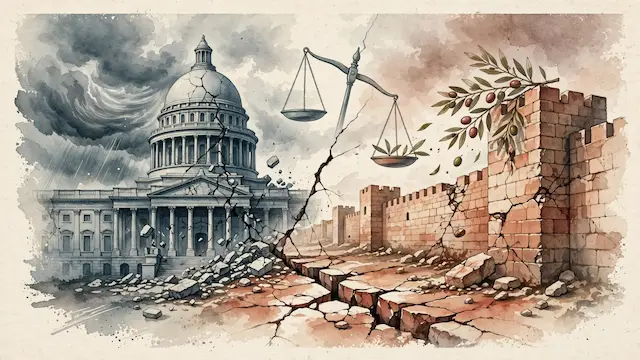
The recent US midterm elections and their implications for Donald Trump's political future have created a challenging new environment for Israel, according to analyst Avi Benayahu. He suggests that Trump's actions, particularly his alleged offer to Netanyahu to forgo US security aid, have had severe repercussions. Benayahu argues that while Prime Minister Benjamin Netanyahu understands the political shifts in both Israel and the US, he is surrounded by individuals whose livelihoods depend on his continued leadership.
The article posits a strong connection between the US and Israeli election outcomes, suggesting that Trump's electoral setbacks could negatively impact Israel's standing and its relationship with the US. It notes that some Republicans, like Vice President J.D. Vance, are linking the party's losses to the ongoing conflict in Iran and support for Israel, though the author suggests broader, more complex reasons, including a perceived pro-Islamist trend globally. A New York-based Republican supporter of Israel expressed deep concern over the erosion of US support for Israel, fearing a decline in backing from administrations and senators, and a rise in critics.
Benayahu criticizes Netanyahu's past diplomatic strategies, including his perceived disrespectful approach to former US Presidents Barack Obama and Joe Biden, and his alleged tendency to act unilaterally in Washington. The article also touches on Netanyahu's past desire to reduce reliance on US security aid, suggesting his recent agreement to forgo it might be influenced by his relationship with Trump. The author questions whether this move is a genuine step towards independence or a political favor to Trump, who allegedly used the aid cut as a campaign point.
The piece further examines the Shas party, suggesting it has an opportunity to reform by reconnecting with its voters and focusing on their needs beyond basic welfare. It criticizes Shas's current leadership under Arie Deri for allegedly transforming the party into a vehicle for patronage and financial gain, alienating religious and traditional voters. The author contends that Netanyahu cannot lead a national unity government due to past broken agreements and a history of damaging relationships with potential partners.
Looking ahead, the article suggests that the incoming Israeli government will face difficult decisions regarding potential US military action in Iran, which may not align with Israel's own security interests. It also highlights a need for Israel to improve its public diplomacy efforts in the US, particularly by engaging with the growing Hispanic community, and to consider creating attractive pathways for Jewish and Israeli immigration back to Israel. The author concludes that a new, potentially more challenging chapter is beginning in US-Israel relations, despite the US remaining Israel's most important ally.
Mentioned


