
US Midterm Elections Impact Global Markets and Israeli Interests
Translated & summarized from Calcalist by baba
Americans are voting in midterm elections that will determine control of Congress, with Democrats favored to win the House. The results are expected to significantly impact the US bond market, with a divided or Democratic-controlled Congress potentially leading to legislative gridlock and stabilizing bond yields. For Israel, the elections raise concerns about increased borrowing costs, potential opposition to arms sales from a Democratic Senate, and the financing of military operations, particularly concerning Iran. A divided Congress could limit fiscal expansion but also complicate funding for ongoing conflicts.
The story in 6 lines · by baba
- US midterm elections will decide control of Congress, impacting President Trump's agenda.
- Democrats are favored to win the House, potentially leading to legislative gridlock.
- A divided Congress is seen as beneficial for US bond markets by limiting fiscal spending.
- Rising US bond yields will increase borrowing costs for the Israeli government.
- A Democratic Senate could oppose arms sales to the IDF, impacting defense agreements.
- Congressional approval is needed for funding military operations, including potential conflict with Iran.
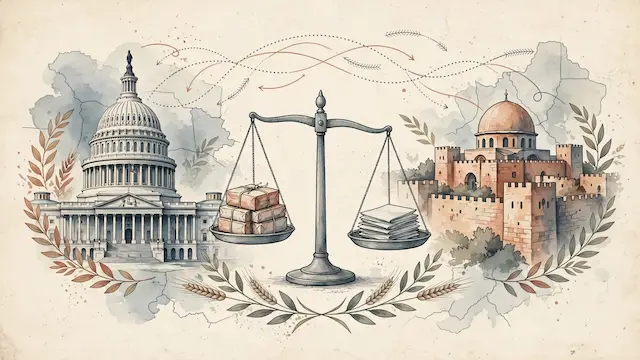
Americans are voting in midterm elections to choose 435 members of the House of Representatives and one-third of the Senate, with President Donald Trump's presidency being a central issue. The results will determine the president's ability to act, as Congress controls the budget, debt ceiling, and appointments. Forecasts suggest Democrats have an over 80% chance of winning a majority in the House and also have favorable odds in the Senate. Economically, the outcome is significant for the US bond market. The yield on 10-year US Treasury bonds is around 5%, reaching a high not seen since 2002, and is a full percentage point higher than before the war with Iran. This increased borrowing cost, with the deficit projected at $2 trillion, impacts government spending and global interest rates, as US Treasuries are considered the world's safest investment. Higher yields in the US have led to similar increases in Japan and Germany. In the US, a divided Congress or a Democratic majority is seen as potentially beneficial for bonds by causing legislative gridlock, which would limit fiscal expansion. This contrasts with Israel, where such paralysis is viewed with concern. The mechanism of "reconciliation," allowing tax and spending legislation with a 51-vote majority, requires control of both the White House and both houses of Congress. If Democrats win only one chamber, this path is closed, making large fiscal packages harder to pass and increasing tensions over government funding and the debt ceiling. Conversely, a Republican sweep could lead to a $1.2 to $1.35 trillion stimulus package, which is seen as fiscally irresponsible. The debt ceiling, raised to over $41 trillion, is expected to be breached around mid-2027, with a projected funding gap of $3.7 trillion over the next four fiscal years. For the stock market, a Republican Senate might provide a boost. The conflict with Iran presents three key issues for Israel: financially, rising US bond yields will increase Israel's borrowing costs; politically, a Democratic Senate could oppose arms sales to the IDF, especially as a defense memorandum of understanding is up for renewal; and regarding a potential conflict with Iran, a two-thirds majority in both houses is needed to block a presidential attack, a threshold unlikely to be met regardless of election outcomes. The cost of the war in the Middle East is substantial, with ongoing monthly costs estimated at $2 to $3 billion. Any supplementary budget request requires approval from both houses of Congress, giving a Democratic House leverage to block funding, which could further increase deficits and bond yields.
Mentioned
The same event, reported separately by each outlet. Open a few to compare what different newsrooms emphasize — and what they leave out.
Centre 2Other 3




Not the same event — other stories that share this one’s people, places, or theme: background, reactions, and follow-ups.


