
Expert Warns New Iran Conflict Could Trigger Global Energy Crisis
Translated & summarized from Cursorinfo by baba
A former Israeli Navy commander warned that a new U.S. and Israeli strike on Iran could cause a global energy crisis and a prolonged conflict. Retired Major General Eliezer Marom stated that Tehran might retaliate by targeting regional energy infrastructure, leading to soaring fuel prices worldwide. He argued that military action is unlikely to dismantle Iran's nuclear program or overthrow its regime and should only be considered if there's an immediate threat of Iran developing a nuclear weapon. Marom suggested continued pressure and waiting for internal changes in Iran is a wiser approach.
The story in 6 lines · by baba
- Retired Israeli Navy commander warns new Iran strike could cause global energy crisis.
- Tehran might retaliate by targeting regional energy infrastructure, prolonging conflict.
- Military action unlikely to dismantle Iran's nuclear program or overthrow regime.
- Operation justified only by intelligence of immediate nuclear weapon development threat.
- Continued pressure and waiting for internal changes is a wiser strategy.
- Consequences of retaliation could outweigh benefits of military operation.
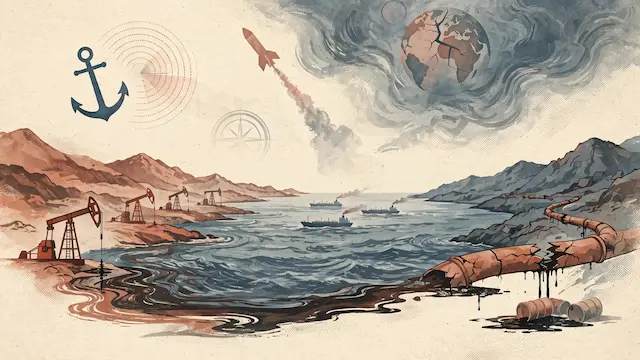
A new military strike against Iran by the U.S. and Israel could trigger a catastrophic chain reaction, impacting global energy markets and potentially escalating into a wider international crisis, according to retired Israeli Navy Commander Major General Eliezer Marom. Speaking on 103FM radio, Marom cautioned that Tehran might retaliate against a limited U.S. attack by targeting regional energy infrastructure, which could prolong any conflict beyond Washington's control and cause a sharp rise in global fuel prices. He emphasized that even a successful operation would not guarantee the dismantling of Iran's nuclear program or the overthrow of its regime. Marom suggested that Iran's nuclear ambitions are a key tool of influence that the leadership is unlikely to relinquish under pressure. He believes the only fundamental ways to alter the situation are a U.S.-Iran agreement or the regime's collapse, neither of which appears imminent. However, Marom noted that a military operation could be justified if intelligence indicates an immediate threat of Iran developing a nuclear weapon, such as preparations for a nuclear test within two weeks. Without such concrete evidence, he advised against immediate military action, as additional airstrikes alone are unlikely to cause regime change, and the consequences of retaliation could outweigh the operation's benefits. The former commander also pointed out that hopes for a swift internal collapse of the Iranian regime, fueled by external pressure and internal dissent, have not materialized. While Iran's economy is deteriorating due to high inflation and unemployment, Marom suggested that internal processes might pose a greater long-term threat to the regime than airstrikes. He also cautioned that even if the current leadership falls, the Islamic Revolutionary Guard Corps could still ensure a successor from the same radical political system remains in power, maintaining hostile policies toward Israel and the U.S. Therefore, Marom concluded, a new attack without a clear strategic objective risks creating more problems than it solves, potentially allowing Iran to retain nuclear capabilities, continue its confrontation, and damage the global energy market. He advocates for continued pressure on Tehran and waiting for internal changes, reserving military action only for an immediate, otherwise unresolvable threat.
Mentioned
The same event, reported separately by each outlet. Open a few to compare what different newsrooms emphasize — and what they leave out.
Centre 1Other 1

Not the same event — other stories that share this one’s people, places, or theme: background, reactions, and follow-ups.
