
Israel's Election Results Leave Government Formation Uncertain
Translated & summarized from Ice by baba
Israel's 26th Knesset elections concluded with no clear majority, leaving Benjamin Netanyahu's Likud as the largest party but unable to form a government alone. High voter turnout of 77% reflects public engagement but no decisive mandate for any bloc. Gadi Eisenkot's National Unity party saw significant gains, while Arab parties gained influence. The nation faces critical issues like cost of living and security, requiring a government capable of decisive action and reform.
The story in 6 lines · by baba
- Israel's 26th Knesset elections resulted in no clear majority, leaving government formation uncertain.
- Benjamin Netanyahu's Likud party emerged as the largest but lacks a coalition majority.
- Gadi Eisenkot's National Unity party showed significant gains, indicating a desire for new leadership.
- Arab parties hold considerable influence in potential coalition-building scenarios.
- High voter turnout of 77% signals public engagement despite political divisions.
- Israel faces pressing domestic and security challenges requiring decisive government action.
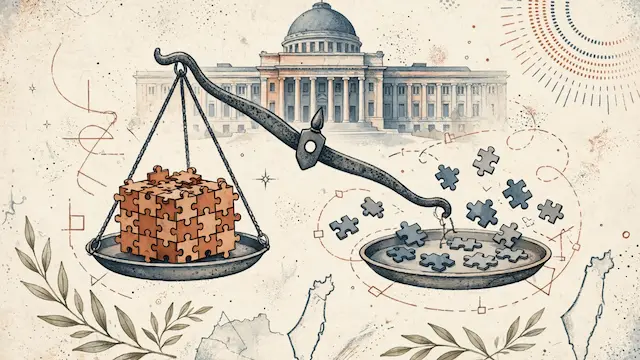
Following the 26th Knesset elections, Israel faces a complex political landscape with no clear victor, leaving the crucial question of government formation unresolved. While the Likud party, led by Benjamin Netanyahu, emerged as the largest party, the bloc of parties supporting his continued leadership failed to secure the necessary majority to form a government independently. This outcome signifies that the Israeli public voted in large numbers, with a turnout of approximately 77%, but did not grant any single bloc a decisive mandate.
Benjamin Netanyahu has once again demonstrated his ability to maintain a significant base of support, despite years of political, social, and security challenges. However, the Likud's status as the largest party does not translate into a clear path to forming a stable coalition. The election results highlight the limitations of a politics focused on camp loyalty, indicating that while Netanyahu can retain his supporters, he struggles to broaden his appeal sufficiently for a stable government.
A significant development in the election was the rise of Gadi Eisenkot and the National Unity party, reflecting a public desire for different, more unifying leadership. Eisenkot faces the challenge of translating this electoral success into a change of government by building partnerships across parties with diverse worldviews. His success will be measured not just by his party's seat count but by its ability to convert public support into practical political power.
The election results also grant considerable influence to Arab parties, potentially impacting the formation of an alternative government or the viability of a minority government. This situation necessitates a candid discussion about the role of Arab citizens in Israel's political system, emphasizing their right to participate in shaping the nation's future while requiring clear agreements on security, citizenship, the rule of law, and shared national interests.
As politicians focus on coalition calculations, Israelis grapple with pressing issues such as the high cost of living, housing prices, the education and healthcare systems, and social disparities. Security challenges, regional relations, Israel's international standing, and restoring trust in state institutions also demand attention. The article stresses that Israel cannot afford further political paralysis and needs a government capable of making decisions, implementing reforms, and planning for the nation's long-term future.
The central lesson from the elections is that Israeli society remains divided but hopeful, with high voter turnout indicating faith in democracy. The responsibility now lies with party leaders to prioritize the nation's future over personal ambitions, demonstrating leadership that can compromise without abandoning principles, listen without losing authority, and unite rather than alienate. The election results present an opportunity for a new chapter if leaders exhibit national responsibility, or risk further political crisis if they remain entrenched in their positions.
Mentioned
The same event, reported separately by each outlet. Open a few to compare what different newsrooms emphasize — and what they leave out.
Arab 1Other 1

Not the same event — other stories that share this one’s people, places, or theme: background, reactions, and follow-ups.


