
Netanyahu Must Rethink Strategy After Unexpected Election Outcome
Translated & summarized from Maariv by baba
Prime Minister Benjamin Netanyahu faces a strategic reevaluation following an election where far-right figures Itamar Ben-Gvir and Bezalel Smotrich inadvertently motivated a high Arab voter turnout. This outcome, fueled by extremist rhetoric and societal fears, underscores a deep national divide. The article advocates for a unity government to address critical issues and heal divisions, but acknowledges significant political hurdles. Ultimately, it calls for Israelis to overcome suspicion and compromise for national reconciliation.
The story in 5 lines · by baba
- Far-right ministers Ben-Gvir and Smotrich unintentionally spurred high Arab voter turnout, acting as campaign managers.
- Extremist rhetoric has created a climate of fear, leading to a counter-reaction within the Arab community.
- The article suggests a national unity government excluding extremists as the best path forward for Israel.
- Netanyahu's bloc lost significant ground, resulting in a minority of 53 seats and political uncertainty.
- The author calls for Israelis to overcome suspicion and compromise to achieve national reconciliation.
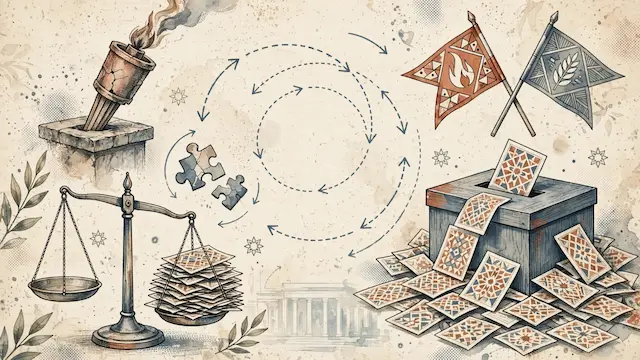
The recent election results have forced Prime Minister Benjamin Netanyahu to reconsider his political path, according to analyst Lihla Sigan. Far-right ministers Itamar Ben-Gvir and Bezalel Smotrich, who advocated for extreme positions, inadvertently mobilized the Arab public to vote in unprecedented numbers, acting as unintentional campaign managers for the "Joint List" party. This surge in Arab voter turnout, driven by fear and a sense of alienation, highlights a deep societal divide and the need for national reconciliation.
Sigan argues that the prevailing extremist rhetoric, amplified by campaigns like the Likud's "Right or Palestine," has fostered a climate of fear. While this rhetoric may have become normalized for many Israelis, it has generated greater anxiety within the Arab community, leading to a backlash. The article points to the high murder rate within the Arab sector and the hostile attitude towards Arabs in general as contributing factors to this counter-reaction, emphasizing that extremism breeds extremism.
The author suggests that a national unity government, excluding extremists like Ben-Gvir and Smotrich, as well as the ultra-Orthodox and Arab parties, would be the most beneficial solution for Israel. Such a government could address critical issues like the conscription law, judicial reform, and international relations, aiming to heal the nation's divisions. However, deep-seated resentments and political maneuvering, particularly Netanyahu's tactics, pose significant obstacles to forming such a coalition.
Despite Netanyahu securing more mandates than predicted, his bloc lost significant ground, leaving him with a minority of 53 seats. This outcome presents an opportunity for the opposition, though the stability of any potential government remains uncertain. The article concludes that Israelis must confront their own fears and prejudices, learn to view the "other half" of the nation with less suspicion, and strive for compromise to foster national healing and a more unified future.
Mentioned



