
Israel's "Change Camp" Considers Direct Prime Ministerial Elections to Break Stalemate
Translated & summarized from Panet by baba
Senior officials in Israel's "Change Camp" are considering direct prime ministerial elections to overcome the political stalemate, a move that would allow the public to elect the premier who would then automatically form a government. This proposal, known as the "Netanyahu 2021 model," aims to enable the formation of a minority government without relying on Arab parties. The plan requires new legislation and is being weighed against options for new elections or a national unity government.
The story in 6 lines · by baba
- Israel's "Change Camp" is considering direct prime ministerial elections to break the political deadlock.
- The proposal, called the "Netanyahu 2021 model," would allow the public to directly elect the prime minister.
- The winner of direct elections would automatically gain the right to form a government.
- This could enable a minority government, bypassing the need for Arab party support.
- Implementing the plan requires new legislation to change the current electoral system.
- Other options include new elections or forming a national unity government with Netanyahu.
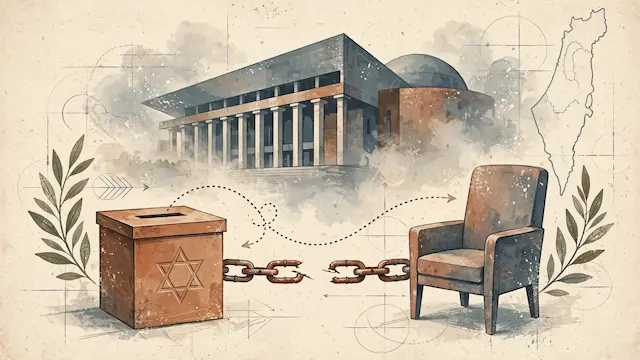
Senior officials within Israel's "Change Camp" are reportedly exploring the possibility of direct prime ministerial elections as a means to resolve the current political deadlock, according to a report by N12. This proposal, dubbed the "Netanyahu 2021 model" by proponents, would allow the public to directly elect the prime minister, granting the winner the automatic right to form a government without needing a majority of 61 Knesset members. Proponents believe this could enable the formation of a minority government that does not rely on the support of Arab parties, while also avoiding new elections or a national unity government with Prime Minister Benjamin Netanyahu.
The idea echoes a proposal Netanyahu himself put forward after the March 2021 elections, which ended without a clear victor. At that time, Netanyahu's bloc secured 59 seats, falling short of the 61 needed to form a government. He subsequently engaged in discussions with Mansour Abbas's United Arab List and publicly suggested direct elections as a solution to the political crisis. Although not implemented then, the concept is now being considered by the opposition.
The underlying logic of the current proposal is to enable the "Change Camp" to form a government independently of the United Arab List and the Joint List. The envisioned scenario involves the directly elected prime minister forming a minority government without needing coalition agreements with Arab parties. This would allow Arab citizens to vote for the prime minister, while the "Change Camp" would bypass the need for political understandings with Arab Knesset members.
Implementing this plan would necessitate new legislation, as the current electoral system does not automatically grant a directly elected prime minister the authority to form a government without Knesset approval. This option is being considered alongside two others: proceeding to new elections, which could potentially strengthen Netanyahu's political position, or attempting to form a national unity government that includes him.
The report emphasizes that this is currently one of several options under discussion among senior "Change Camp" officials and does not represent an approved proposal or an agreed-upon plan.
The same event, reported separately by each outlet. Open a few to compare what different newsrooms emphasize — and what they leave out.
Centre 2Arab 1



Not the same event — other stories that share this one’s people, places, or theme: background, reactions, and follow-ups.




