
Israeli Voters Show Enduring Loyalty to Netanyahu's Likud Party
Translated & summarized from Cursorinfo by baba
Israeli voters demonstrated strong loyalty to Prime Minister Benjamin Netanyahu's Likud party in the 2026 elections, despite the ongoing war and criticism. The Likud emerged as the largest party, with opposition leader Gadi Eisenkot failing to gain a significant advantage. Voter loyalty is attributed to group identity and emotional connection to the party, even in war-affected areas like Kiryat Shmona. The opposition faces challenges uniting diverse groups, and their strategy needs reevaluation to overcome Likud's enduring electoral base.
The story in 6 lines · by baba
- Israeli voters maintained strong support for Benjamin Netanyahu's Likud party in the 2026 elections.
- Gadi Eisenkot and the opposition failed to achieve a significant electoral advantage over the ruling Likud.
- Voter loyalty to Likud is driven by group identity and emotional connection, transcending war and criticism.
- Even war-torn communities like Kiryat Shmona showed substantial support for Likud.
- The opposition must re-evaluate its strategy to challenge Netanyahu's established voter base.
- The election results indicate a limited shift in the balance between major political blocs.
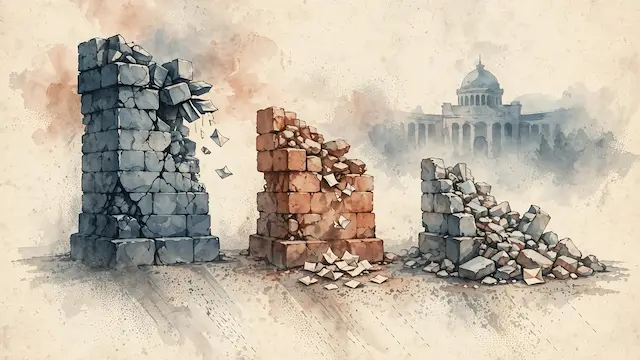
Despite the ongoing war, the October 7th attacks, and widespread criticism of the government, voters in Israel have largely maintained their support for Prime Minister Benjamin Netanyahu's Likud party. The 2026 parliamentary elections saw Netanyahu's Likud emerge as the largest political force, with opposition leader Gadi Eisenkot and his allies failing to secure a significant advantage. Analysis suggests that the opposition's struggles stem less from campaign missteps and more from the deep-seated loyalty of many Israeli voters to their political camp, a phenomenon attributed to group identity and a sense of belonging.
Even in communities directly impacted by the war, such as Kiryat Shmona, which experienced evacuation and destruction, a substantial portion of the population continued to vote for Likud. Approximately half of Kiryat Shmona's voters supported the party, demonstrating that for many right-wing supporters, party affiliation transcends specific government actions or recent personal hardships. This loyalty is rooted in a strong emotional connection to the party, making voters less likely to switch allegiances.
The Israeli political landscape is increasingly characterized by stable social groups rather than purely ideological divides. This shift has seen the rise of politicians whose positions depend heavily on the current leader, strengthening Netanyahu's personal role and his electoral base. Former prominent Likud figures like Limor Livnat, Benni Begin, and Yuval Steinitz, who represented a more traditional liberal-national direction, have been replaced by those more aligned with the current leadership.
Conversely, Netanyahu's opponents face the challenge of uniting diverse voters united primarily by a desire for change. This coalition proves less stable, with internal disputes over leadership and future government formation impacting their ability to present a united front. Following the election results, criticism has been directed at Eisenkot, Naftali Bennett, Avigdor Lieberman, and Yair Golan for their campaign decisions.
Ultimately, the election results indicate that the fundamental balance between major political blocs has shifted less than anticipated. While Netanyahu's bloc did not secure the 61 seats needed to form a government, its electoral foundation remains robust. Compared to the 2022 elections, where Likud secured 64 seats, the current outcome shows a limited erosion of support for the ruling camp, underscoring the need for the opposition to reconsider its strategy for challenging Netanyahu's long-standing voter base.
Mentioned
The same event, reported separately by each outlet. Open a few to compare what different newsrooms emphasize — and what they leave out.
Centre 1Other 2


Not the same event — other stories that share this one’s people, places, or theme: background, reactions, and follow-ups.


