
Post-Election Scenarios Explored Amidst Arab Party Gains and Pollster Failures
Translated & summarized from Kikar HaShabbat by baba
Israeli election results confirmed a religious bloc majority, despite significant gains by Arab parties, which the article identifies as a dramatic development. Pollsters faced widespread criticism for inaccurate predictions. Potential government scenarios include a unity government with Netanyahu (65% probability), a coalition with Haredi parties without him (45-55%), or a minority government backed by Arab parties (20-30%). Repeat elections are considered highly probable (65-75%) if no coalition is formed.
The story in 5 lines · by baba
- The religious bloc secured a majority in the Israeli elections, confirming its status as the absolute majority.
- Arab parties saw a significant increase in support, raising concerns about their stance on terrorism.
- Pollsters and exit pollsters are facing severe criticism for widespread inaccuracies in their predictions.
- A unity government with Netanyahu is considered the most likely scenario, with a 65% probability.
- Repeat elections are highly probable if no coalition can be formed, with a 65-75% likelihood.
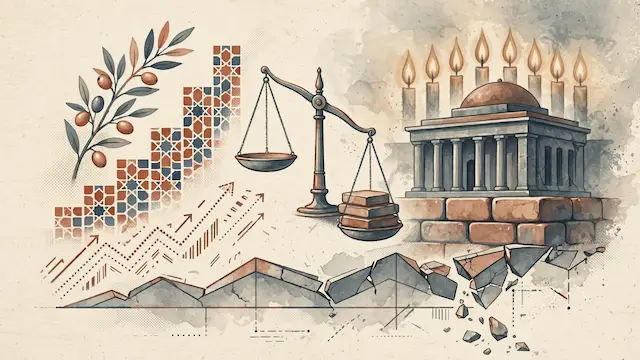
The recent Israeli election results have demonstrated that the religious bloc remains the absolute majority, despite increased turnout from the left. This outcome is interpreted as a clear mandate for Netanyahu and the religious bloc, countering claims that Tel Aviv residents did not vote. Pollsters and exit pollsters are facing significant criticism, with most failing to accurately predict the election results, including the decline of the Shas party and the substantial rise of Arab parties. The article argues that these inaccuracies, sometimes differing by tens of mandates, undermine democratic trust as voters base decisions on flawed predictions.
The significant increase in support for Arab parties is highlighted as the most dramatic development of the election. The article contends that concerns about a larger Arab representation in the Knesset are not rooted in racism but in the refusal of some parties to condemn terrorism or designate Hamas as a terror organization. It cites an instance where a representative called Hamas a "charity organization." The piece questions how parties that do not identify with Israel's existence or aspirations can gain Knesset seats, especially given suspicions of foreign funding influencing the elections. This situation is presented as a flaw in the democratic system, lacking clear boundaries for who can participate.
Looking ahead, several potential government formations are discussed. A unity government with Netanyahu, possibly involving a rotation where he later becomes president in exchange for a pardon, is seen as a realistic option, with a 65% probability. This scenario is partly driven by the left's fear of repeat elections. Another possibility is a government with the Haredi parties without Netanyahu, offering them concessions on conscription laws, though this is viewed as a betrayal of the right-wing bloc and their voters, with a 45-55% probability.
A minority government supported by Arab parties is considered a nightmare scenario for the right, potentially giving internal enemies control over democratic decisions, with a 20-30% probability. Finally, repeat elections are deemed highly likely if neither Netanyahu nor Eisenkot can form a government, with a 65-75% probability. This outcome is seen as potentially beneficial for the right-wing bloc, as it might discourage left-wing and Arab voters from participating in subsequent elections.
Mentioned


