
Israeli Election Uncertainty Triggers Market Drop, Delays Interest Rate Cuts
Translated & summarized from Calcalist by baba
Israel's stock market fell 3% after elections failed to yield a clear government, with banks and real estate leading the decline. The uncertainty significantly reduces the likelihood of the Bank of Israel cutting interest rates soon, as the central bank awaits clarity on government formation and the 2027 budget. The weakening shekel adds to inflationary concerns, while the U.S. Federal Reserve kept its interest rates unchanged.
The story in 6 lines · by baba
- Israel's stock market dropped 3% following inconclusive election results.
- Banking and real estate sectors led the stock market decline.
- Election uncertainty makes Bank of Israel interest rate cuts unlikely in the near future.
- Concerns over the 2027 budget could widen Israel's deficit to 5%-6% of GDP.
- The weakening shekel is adding inflationary pressure to the Israeli economy.
- The U.S. Federal Reserve voted to keep interest rates unchanged.
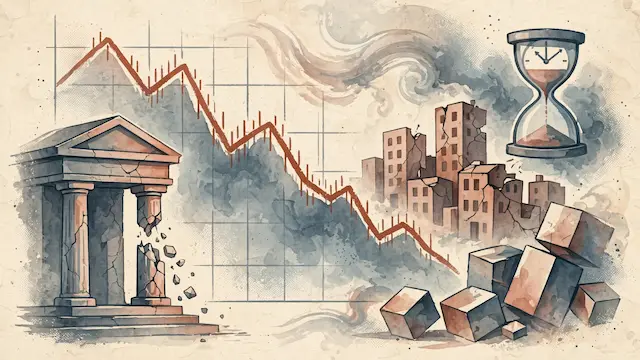
Following Israel's recent elections, which failed to produce a decisive governing coalition, the Tel Aviv Stock Exchange experienced a significant downturn, closing down approximately 3%. The decline was primarily led by the banking and real estate sectors. While political analysts can interpret the results through various lenses, the market's reaction suggests a broader economic concern among investors.
The primary economic driver behind the market's unease is the potential delay in interest rate cuts by the Bank of Israel. Governor Amir Yaron had previously alluded to the possibility of an indecisive election outcome impacting monetary policy. The current political uncertainty, coupled with concerns about the 2027 budget potentially widening the deficit to 5%-6% of GDP, makes it unlikely that the central bank will lower interest rates soon. The weakening shekel further exacerbates inflationary pressures.
The article also examines the interconnectedness of the real estate and banking sectors, noting the banks' increased exposure to real estate companies in recent years. It draws a parallel to the 2019 elections, where market declines were short-lived after a temporary government was formed, questioning whether a similar outcome might occur again.
In parallel, the U.S. Federal Reserve maintained its interest rates unchanged, with a 10-2 vote. Two dissenting members advocated for a rate hike. The discussion also touched upon Fed Chairman Kevin Warsh's strategy of shortening statements, reducing meeting frequency, and eliminating forward guidance, exploring whether other central banks might adopt similar approaches.
Mentioned



