
Israeli Political Stalemate Threatens Billions in Defense and Tech Funding
Translated & summarized from Cursorinfo by baba
Israel's political uncertainty following elections is jeopardizing billions in funding for defense, technology, and state programs. The lack of an approved budget risks a transition to temporary financing, hindering new initiatives and potentially delaying crucial reforms like digital VAT and international corporate tax measures. Defense needs an additional 40 billion shekels, with only 15 billion secured, while tech investments and long-term arms deals also face funding challenges. The situation could significantly impact Israel's ability to finance strategic tasks.
The story in 6 lines · by baba
- Political uncertainty in Israel threatens billions in defense funding and strategic projects.
- A transition to temporary, one-twelfth monthly financing could limit government spending and new initiatives.
- High-tech development programs face delays due to the need for long-term funding commitments.
- Defense agencies seek an additional 40 billion shekels, with a 25 billion shekel gap remaining.
- Tax reforms, including digital VAT and international corporate tax, risk postponement without government approval.
- Long-term arms purchase commitments could further strain public finances, impacting civilian needs.
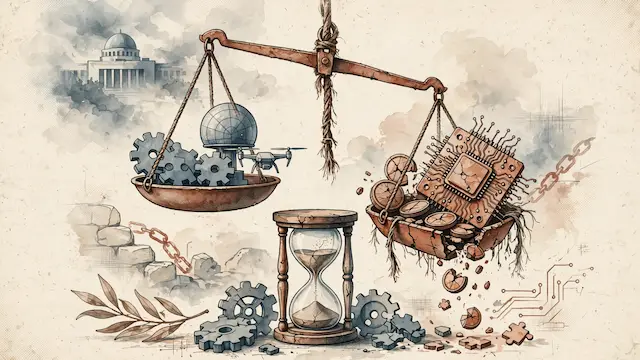
Israel faces significant economic repercussions due to political uncertainty following recent elections, potentially delaying crucial strategic projects. The absence of a new government and an approved state budget could hinder major reforms, reduce defense funding, and jeopardize investment programs worth tens of billions of shekels, according to Channel 9. Negotiations are dragging on, increasing the likelihood that Israel will enter 2027 without a full budget, with state expenditure financing becoming particularly acute by March.
The primary risk lies in transitioning to a temporary funding system, where government bodies receive one-twelfth of the previous year's budget monthly. While this mechanism sustains operations during political impasses, it severely limits the government's ability to increase spending and launch new initiatives, failing to account for population growth and evolving societal needs. Governor of the Bank of Israel Amir Yaron has noted this dual nature, stating it curbs budget deficits but also restrains economic growth.
High-tech sector development programs, aimed at retaining skilled professionals and attracting AI investment, are particularly vulnerable. These initiatives require long-term funding and clear government commitments, which are unlikely until a government is formed and an economic plan is adopted. Additionally, approximately 5 billion shekels allocated for coalition funds in the 2026 budget may become inaccessible if not part of the base budget structure.
Defense spending poses a more serious challenge. Security agencies are seeking an additional 40 billion shekels by the end of 2026, a sum already approved by Prime Minister Benjamin Netanyahu. However, funding sources have only been identified for 15 billion shekels, leaving a 25 billion shekel gap that is difficult to fill amid political uncertainty. Foreign banks estimate Israel's military budget could reach nearly 200 billion shekels in 2027, partly due to potential future actions against Iran, adding further strain to public finances.
Long-term arms purchase commitments of around 400 billion shekels, planned by the outgoing government, could further restrict funding for civilian needs. Tax reforms, including a digital VAT mechanism designed to boost revenue by billions monthly and the international Pillar Two corporate tax initiative, also risk delays without final parliamentary approval, creating uncertainty for businesses.
The prolonged political deadlock threatens defense funding, tech investments, tax revenues, and development programs. The longer the country remains without an approved budget, the more challenging it will be to launch new initiatives and allocate funds, with economic risks extending beyond typical political disagreements.
The same event, reported separately by each outlet. Open a few to compare what different newsrooms emphasize — and what they leave out.
Other 2

Not the same event — other stories that share this one’s people, places, or theme: background, reactions, and follow-ups.



