
Israeli Markets Rebound After Election Uncertainty, Investors Seek Economic Deal
Translated & summarized from Hamal by baba
Israeli financial markets initially rallied on hopes of an election "change bloc" victory, but reversed course as political deadlock emerged, causing the dollar to strengthen and stocks to fall. Investors had expected a new government to bring economic certainty and implement reforms. The current uncertainty is feared to harm the economy, prompting calls for an "economic New Deal" between the coalition and opposition to address budget, coalition funds, and defense spending. Failure to reach agreements is expected to negatively impact ordinary citizens.
The story in 6 lines · by baba
- Israeli markets initially rose on election day optimism but fell as political deadlock became apparent.
- Investors had expected a "change bloc" victory to bring economic certainty and reforms.
- The dollar strengthened against the shekel, and stock markets, especially banks and real estate, declined.
- There are calls for an "economic New Deal" between the coalition and opposition to resolve key issues.
- Former economic officials are seen as key to reaching agreements on budget and defense spending.
- The political stalemate is expected to lead to increased economic uncertainty and costs for citizens.
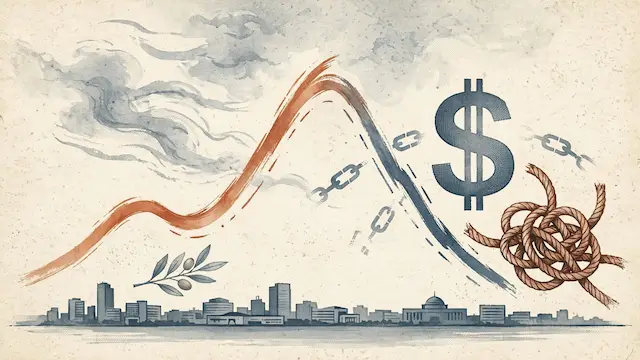
Israeli financial markets experienced a significant shift following the election results, moving from initial optimism to concern over political deadlock. Leading up to election day, investors anticipated a change in government, which was reflected in a 1.5% drop in the dollar against the shekel and a 1.9% rise in the Tel Aviv 35 stock index. This optimism was based on the expectation that a "change bloc" victory would bring greater economic certainty and international confidence, leading to immediate policy changes.
However, as the election results became clear, revealing a political stalemate, market sentiment reversed. The dollar strengthened against the shekel, and stock markets, particularly bank and real estate shares, saw declines. This downturn was driven by fears of economic chaos and a dangerous "quagmire" that could harm the economy. The expectation was that a new government would prioritize urgent measures such as approving the state budget, setting different economic priorities, and launching reforms in areas like education, employment for the Haredi sector, and the Arab sector, alongside tax changes to reduce inequality.
Furthermore, investors had anticipated crucial appointments, including a State Comptroller and a Director-General for the National Insurance Institute. The election outcome, however, indicated that these steps would not be taken, leading to heightened economic and political uncertainty. The financial markets have begun to penalize this situation.
In response to the current impasse, there is an urgent call for an "economic New Deal" between the ruling coalition and the opposition. Prime Minister Netanyahu is urged to act as a "responsible economic adult" for the benefit of the economy. The opposition is called upon to reach agreements with him on key issues, including budget approval, coalition fund allocations, and the size and funding of the defense budget. Experienced economic figures from the "change bloc," such as former Ministry of Finance Director-General Keren Turner and former Budget Division head Shaul Meridor, are seen as potential assets in navigating these economic agreements. The current stalemate is predicted to ultimately lead to significant costs for the average citizen.
Mentioned



