
Israeli Markets React to Election Uncertainty: Investment Advice
Translated & summarized from Globes by baba
Israeli stock market indices and the shekel fell sharply following election results that raised concerns about political instability and potential repeat elections. Investment experts advise against panic selling, with some seeing the dip as a buying opportunity for long-term investors. Analysts recommend adjusting investment portfolios by shortening bond durations and focusing on export-oriented and defensive sectors, while exercising caution in real estate and leveraged corporate bonds.
The story in 5 lines · by baba
- Israeli stock indices and the shekel fell due to election uncertainty and fears of political instability.
- Investment managers advise against panic selling, suggesting the dip may be a buying opportunity.
- Analysts recommend shortening bond durations and focusing on inflation-linked government bonds.
- Export-oriented companies in defense and technology are seen as potential beneficiaries.
- Caution is advised for traditional local sectors like banking, insurance, and real estate.
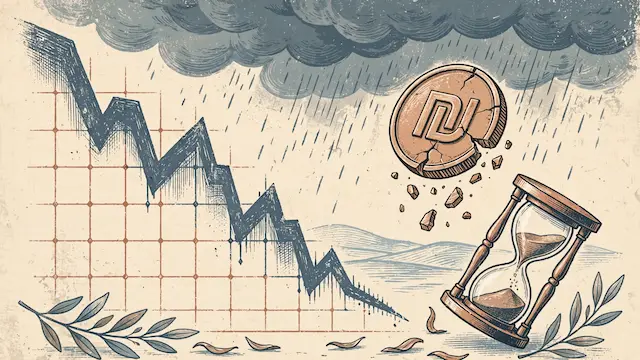
Israeli capital markets experienced a significant downturn following the recent election results, with leading Tel Aviv Stock Exchange (TASE) indices dropping by up to 3% on Wednesday. Real estate and financial stocks, including insurance and banks, led the decline, erasing most of October's gains for the main index. The dollar also surged by 1.2% against the shekel, reaching 3.11 shekels, amid concerns of political instability and potential repeat elections.
Investment managers are advising against hasty decisions, urging investors not to sell stocks under pressure. Some experts view the current market dip as a buying opportunity for those with a medium to long-term investment horizon. Gil Dotan, Vice President of Premium Clients at IBI Investment House, believes the election's impact will be temporary, emphasizing a focus on long-term portfolio building and economic data, such as Bank of Israel's projected 7% growth for 2027. He noted that managed portfolios are diversified internationally, mitigating risk.
Rami Dror, CEO of Value Advanced Investments, characterized the market movement as a "disappointment, not panic," a correction following pre-election rallies. He pointed out that the shekel strengthened and the stock index rose over 100% in the past four years under the current government, suggesting government actions don't fully dictate market performance. Dror does not see the post-election stock declines as a significant buying opportunity, describing it as a minor correction.
In the bond market, government bond indices also saw declines. Analyst Lior Vider suggests shortening bond durations due to potential increased government debt issuance amid political deadlock. He recommends avoiding long-term unlinked shekel bonds and focusing on short to medium-term maturities (up to 3 years), favoring inflation-linked government bonds for protection. For corporate bonds, Vider advises caution, focusing on high-rated, quality bonds and avoiding companies needing to refinance debt soon.
Regarding specific sectors, Dotan cautiously points to export-oriented companies, particularly in defense and technology, as potential beneficiaries due to global geopolitical events and their international operations. Vider agrees, highlighting export-driven companies and global players as a natural hedge against local uncertainty. He also advises favoring defensive sectors less dependent on government budgets or regulatory changes, while urging extreme caution in traditional local sectors like banking, insurance, and leveraged real estate due to potential regulatory intervention, economic slowdown, and high financing costs.
Mentioned
The same event, reported separately by each outlet. Open a few to compare what different newsrooms emphasize — and what they leave out.
Other 2

Not the same event — other stories that share this one’s people, places, or theme: background, reactions, and follow-ups.




