
Israeli Markets Plunge as Election Results Shift
Translated & summarized from Arab48 by baba
Tel Aviv's stock market and the Israeli shekel experienced sharp declines on Wednesday following the release of final Knesset election results, which showed Benjamin Netanyahu's bloc improving its position. The "Tel Aviv 90" index dropped 4.6% and the shekel weakened against the dollar and euro. Experts warned of continued volatility and potential impacts on fuel prices and business import costs. The market's reaction comes amid uncertainty over the formation of the next Israeli government.
The story in 6 lines · by baba
- Tel Aviv stock market indices and the Israeli shekel fell sharply after final election results emerged.
- The "Tel Aviv 90" index dropped 4.6%, the "Tel Aviv 125" by 2.4%, and the "Tel Aviv 35" by 1.8%.
- The shekel weakened against the dollar, rising from 3.02 to 3.13, and the euro from 3.37 to 3.47.
- Financial and real estate sectors were hit hardest, with banking and construction indices seeing significant drops.
- Experts warned of continued currency volatility and potential impacts on fuel prices and business import costs.
- The market's reaction occurs amid uncertainty over the formation of the next Israeli government.
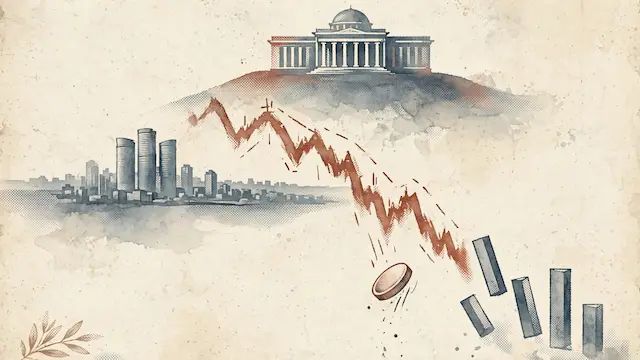
Tel Aviv's stock market experienced sharp declines on Wednesday, with the shekel also falling against the dollar and euro, following the release of final Israeli Knesset election results. The results indicated an improvement in Benjamin Netanyahu's bloc's standing compared to initial projections. The "Tel Aviv 90" index dropped 4.6%, the "Tel Aviv 125" index fell 2.4%, and the "Tel Aviv 35" index decreased by 1.8%. This contrasts with sharp gains of nearly 2% seen on Monday, the eve of the elections. Declines were concentrated in financial and real estate sectors, with the banking index down 4.8%, insurance by 5.2%, and financial services by 5%. The real estate sector saw the general index drop 6.3%, "Real Estate 35" by 6.2%, and the construction index by 8.7%. Infrastructure also fell 3.4%. Major insurance companies like Migdal, Harel, and Clal Insurance saw significant drops, as did real estate firm Melisron and Azrieli, along with banks Discount, Mizrahi Tefahot, Hapoalim, Leumi, and First International Bank.
The shekel's performance mirrored the market's volatility. It had strengthened during election day, with the dollar falling to 3.02 shekels and the euro to 3.37 shekels. However, after initial projections and subsequent actual results showing Netanyahu's bloc gaining ground, the dollar rose to approximately 3.13 shekels and the euro to 3.47 shekels. Yossi Freiman, General Manager of Brico for Risk Management, Finance and Investments, attributed the initial shekel optimism to the "change bloc's" prospects, which reversed as Netanyahu's bloc strengthened, raising concerns. Freiman warned of continued sharp exchange rate fluctuations and suggested the dollar could reach 3.20 shekels in the short term if Netanyahu's bloc secures a majority, though he noted potential foreign currency inflows could moderate this. He also pointed out that the positive trend on Wall Street might contribute to increased foreign currency supply.
These currency fluctuations could impact fuel prices, with previous estimates suggesting a significant increase for 95-octane gasoline to nearly 9 shekels per liter. The earlier shekel strengthening had been expected to mitigate this rise. For businesses, particularly small and medium-sized enterprises, a weaker shekel increases import costs and payments to foreign suppliers. Eran Buchris, an Accountant and Strategic Business Consultant, calculated that a 5-agora rise in the dollar's value adds 2,500 shekels to a 50,000-dollar payment, potentially eroding profit margins for businesses with thin margins. He advised such businesses to consider hedging exchange rates and repricing future deals rather than betting on a shekel recovery.
Conversely, Meir Feder, General Manager of Feder Real Estate and Mortgage Consulting, stated that the dollar's rise does not necessitate delaying mortgage applications, as shekel-denominated housing loans are not directly affected by dollar exchange rates. He advised prospective homebuyers to verify interest rate approval validity and negotiate with banks before signing, rather than making decisions based on currency fluctuations. The market's reaction occurs amidst ongoing uncertainty regarding the formation of the next Israeli government, as no bloc secured a clear parliamentary majority, despite the improvement in Netanyahu's bloc's position as vote counting progressed.
Mentioned




