Israel Election Results Uncertain as Vote Count Continues
Translated & summarized from Jüdische Allgemeine by baba
Israel's parliamentary election results remain uncertain after more than half the votes are counted, with no clear majority for either Prime Minister Benjamin Netanyahu's bloc (55 seats) or the opposition (49 seats). The final outcome hinges on approximately 600,000 to 650,000 "special votes" from soldiers and others, which are still being processed. The preliminary results have caused pressure on the Israeli shekel, and the full results are not expected until these special ballots are tallied.
The story in 5 lines · by baba
- No clear majority emerged in Israel's parliamentary election after over half of votes were counted.
- Prime Minister Benjamin Netanyahu's bloc holds 55 seats, while the opposition has 49 seats.
- Approximately 600,000 to 650,000 special votes from soldiers and others are yet to be counted.
- The preliminary results have put pressure on the Israeli shekel.
- Netanyahu's Likud party is the largest single party with a projected 27 seats.
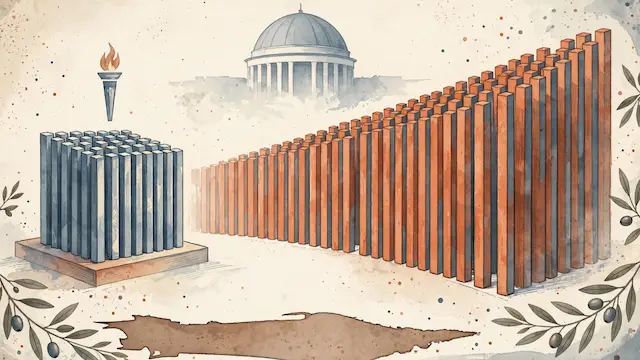
Israel's parliamentary election results remain undecided, with no clear majority emerging even after more than half of the votes have been counted. The bloc led by Prime Minister Benjamin Netanyahu currently holds 55 seats, while the opposition alliance, including former Chief of Staff Gadi Eisenkot, has secured 49 seats. Predominantly Arab parties collectively hold 16 seats. A majority in the 120-seat Knesset requires 61 seats. The numbers are still fluctuating; Netanyahu's alliance briefly held 56 seats before losing one to the United List, a party representing mostly Arab voters. Both the right-wing and religious bloc, and the camp seeking political change, are still short of a majority.
As of 7:58 AM, 57.3 percent of ballots had been tallied by the Central Election Commission, with earlier counts of 51.5 percent showing a similar trend. These figures are preliminary and subject to change as the count progresses. Netanyahu's Likud party is projected to be the largest single party with 27 seats, followed by Eisenkot's Yashar party with 21 seats. Other projected seat counts include Naftali Bennett's Beyachad party with 11, United Torah Judaism and Democrats with nine each, Israel Beitenu with eight, and Shas with seven. Otzma Yehudit, led by Itamar Ben-Gvir, and the alliance of Religious Zionism and Zehut are each expected to get six seats, while the Islamist party Ra'am has four. Several smaller parties are currently below the 3.25 percent electoral threshold.
Initial projections from television stations after polls closed had suggested a narrow lead for Eisenkot's bloc, but the official vote count shifted the picture in Netanyahu's favor. The uncertainty surrounding the political future has impacted financial markets, with the shekel experiencing significant pressure following the initial results. Approximately 600,000 to 650,000 "special votes" from soldiers, reservists, and others unable to vote at their regular polling stations are yet to be included. These votes, which could represent around 15 Knesset seats, are processed separately to prevent duplicate voting and are expected to be fully integrated after verification. Historically, these special votes have sometimes shifted the balance between parties, often benefiting Zionist parties over ultra-Orthodox and Arab parties.
The Israeli military reported a 79.9 percent voter turnout among its personnel, an increase from the 2022 election. Over 890 polling stations were available on military bases, including in operational areas. The army did not release the absolute number of votes cast by soldiers for security reasons. The Central Election Commission's acting director, Dean Livne, anticipates more special votes than initially expected due to the high turnout, which could delay the finalization of the count.
Mentioned
The same event, reported separately by each outlet. Open a few to compare what different newsrooms emphasize — and what they leave out.
Centre 4Right 2Other 4










Not the same event — other stories that share this one’s people, places, or theme: background, reactions, and follow-ups.