
Israeli Election Deadlock Sparks Economic Paralysis and Uncertainty
Translated & summarized from Calcalist by baba
Israel faces a political and economic deadlock following elections where no bloc secured a majority, leading to governmental paralysis and economic uncertainty. Prime Minister Benjamin Netanyahu may seek new elections to remain in power, while critical economic decisions are postponed due to the lack of an approved budget. The high-tech sector continues to perform, but prolonged instability poses risks to foreign investment and the national economy.
The story in 6 lines · by baba
- Israeli elections resulted in a political and economic deadlock with no bloc securing a majority.
- The lack of a government prevents budget approval, leading to indiscriminate spending cuts and delayed reforms.
- Prime Minister Netanyahu may pursue new elections to maintain his position in a caretaker government.
- Critical decisions on defense, fuel subsidies, and international banking services remain pending.
- Economic uncertainty could negatively impact foreign investment and the Israeli stock market.
- The high-tech sector's performance, including major acquisitions, offers a temporary buffer against instability.
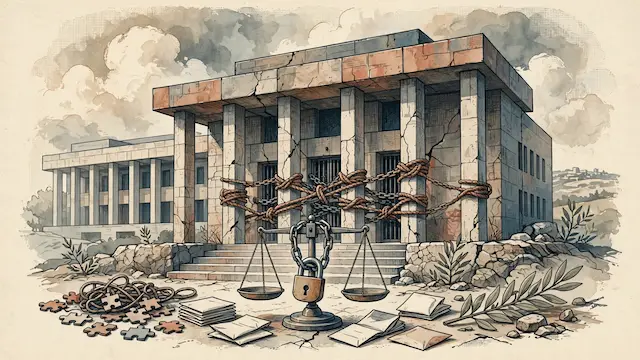
Exit polls released following the closure of polling stations indicate a political and economic stalemate, with no bloc securing the 61 seats needed to form a government. The outgoing coalition lost 14 mandates compared to the 2022 election. The primary loser, however, is the Israeli economy, facing a period of stagnation and uncertainty.
Politically, Prime Minister Benjamin Netanyahu lacks a clear path to forming a government without Arab parties, which are unlikely to support him. This situation creates an incentive for Netanyahu to pursue another round of elections, allowing him to remain in power as head of a caretaker government. Even a minority government would introduce instability, which is detrimental to economic stability.
The immediate economic consequence is the absence of an approved budget. Without a budget, new expenditures and commitments are impossible. If the 2027 budget is not passed by the start of the year, the state will operate on a provisional budget, equivalent to one-twelfth of the previous year's budget monthly. This leads to indiscriminate spending cuts, hindering structural reforms and the reallocation of funds to more pressing needs.
Several critical decisions are pending, including the defense budget, fuel subsidies, and international financial relations, such as correspondent banking services for Palestinian banks. Finance Minister Bezalel Smotrich is unlikely to approve the establishment of a government company to provide these services, despite his government's prior decision. In the current political vacuum, each minister acts independently, with an eye on future elections.
Significant investments are needed in infrastructure, education, and the AI industry, crucial for Israel's long-term economic future. The markets are not surprised by the election outcome, as recent polls predicted a deadlock. The key question is how investors will price in prolonged uncertainty through financial instruments like credit default swaps, the shekel's exchange rate, and the stock market. With 70% of high-tech capital coming from abroad, foreign investors will likely perceive the paralysis and lack of policy direction.
Despite the political uncertainty, the high-tech sector remains a driving force, exemplified by Intel's reported $2.2-2.3 billion acquisition of quantum computing firm Classiq. While such exits are positive, they do not substitute for effective economic policy. The economy has shown resilience with low unemployment, high growth, a strong shekel, controlled inflation, and a booming services export sector. However, this resilience may not last as political time is wasted, the deficit remains above 3% of GDP, and national debt approaches 70% of GDP. Geopolitical risks in Iran, Gaza, Lebanon, and Yemen also persist. Another election cycle, even in a best-case scenario, would push the next elections to spring, leaving Israel to operate on autopilot with an outdated budget and delayed decisions.
Mentioned
The same event, reported separately by each outlet. Open a few to compare what different newsrooms emphasize — and what they leave out.
Centre 1Other 1

Not the same event — other stories that share this one’s people, places, or theme: background, reactions, and follow-ups.



