
Massive Election Logistics Operation Deploys 12,018 Polling Stations, Hundreds of Millions of Ballots
Translated & summarized from JDN by baba
Israel's Central Elections Committee has outlined the massive logistical operation for the 26th Knesset elections, involving 7,331,981 eligible voters and 12,018 polling stations. The process includes 450 million ballots, 100,000 temporary workers, and special provisions for accessible voting and citizens abroad. Free public transportation is provided to encourage voter turnout.
The story in 6 lines · by baba
- Over 7.3 million Israelis are eligible to vote in the 26th Knesset elections.
- The election operation utilizes 12,018 polling stations across Israel and abroad.
- Approximately 450 million ballots were printed for the 37 competing political lists.
- Around 100,000 workers are involved in managing the election day logistics.
- Special polling stations are available for hospital patients, the mobility-impaired, and evacuees.
- Free public transportation is being offered to voters on election day.
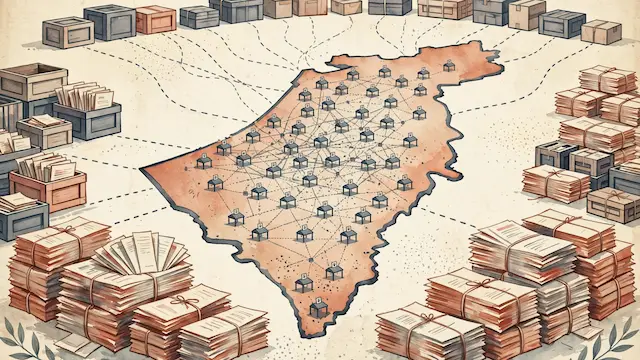
Israel's Central Elections Committee is detailing the unprecedented logistical and organizational effort behind the upcoming 26th Knesset elections. A total of 7,331,981 eligible voters are expected to cast ballots, an increase of approximately 8% or 543,177 voters compared to the 2022 elections. Among these, 618,839 are newly eligible 18-year-old voters.
Ballots were printed for 38 political lists, though only 37 are officially competing after the "Achi" movement withdrew. Any ballots found for "Achi" will be disqualified. Of the 12,018 polling stations nationwide, 6,209 are designated accessible, with 3,621 being specially accessible. Additional stations are located in hospitals (255), facilities for the mobility-impaired (255), prisons and detention centers (57), and five special stations are available for evacuees due to security concerns, who can also vote at any special accessible polling station.
Abroad, 101 polling stations are operating in 99 diplomatic missions. Within the IDF, approximately 850 military polling stations are active, with about a quarter being mobile and staffed by 3,000 soldiers. The operation involves printing 450 million ballots, totaling roughly 250 tons of paper, distributed to about 18,000 ballot boxes.
Around 100,000 workers are employed for the election day operations, a significant jump from the usual 40 permanent staff. Approximately 15,000 cameras will document the voting and counting process, and election integrity supervisors will be present at every counting station. To facilitate public access, 660 intercity transport lines and all Israel Railways lines are operating free of charge.
The same event, reported separately by each outlet. Open a few to compare what different newsrooms emphasize — and what they leave out.
Haredi 1Other 1

Not the same event — other stories that share this one’s people, places, or theme: background, reactions, and follow-ups.




