Why Israel Sticks to Paper Ballots Amid Digital Age
Translated & summarized from Now 14 by baba
Israel continues to use paper ballots for elections, a method defended by security experts as crucial for democratic integrity in the digital age. Despite the convenience of digital options, concerns over cybersecurity, the inherent conflict between voter identification and ballot secrecy, and the potential for large-scale remote manipulation make paper ballots the preferred, albeit seemingly anachronistic, system. European nations like Germany and the Netherlands have also reverted to paper ballots after experiencing issues with electronic systems, reinforcing Israel's approach as a measure of institutional resilience against sophisticated cyber threats and disinformation campaigns.
The story in 6 lines · by baba
- Israel maintains paper ballots for elections, prioritizing security and democratic integrity over digital convenience.
- Digital voting systems face significant risks from malware, remote attacks, and the inherent conflict between voter anonymity and verification.
- Germany and the Netherlands have abandoned electronic voting machines, reverting to paper ballots due to security and transparency concerns.
- The paper ballot system provides a tangible, verifiable process that enhances public trust in election outcomes.
- AI advancements amplify cyber threats, making a digital voting system a prime target for state-sponsored attacks.
- The current paper system allows security forces to focus on combating election-related disinformation rather than direct voting system breaches.
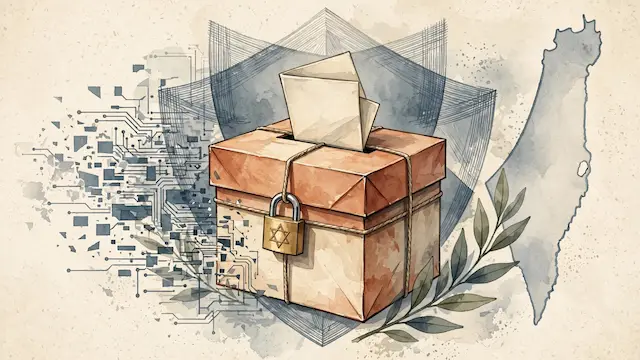
Despite advancements in artificial intelligence and digital management of daily life, Israel continues to conduct elections using paper ballots and manual counting. This seemingly anachronistic method is defended by security experts and election officials as the strongest safeguard for democracy.
In 2026, while many aspects of life are managed digitally, Israeli voters still go to polling stations, receive paper ballots, place them in sealed envelopes, and deposit them in locked blue boxes. This process, though appearing outdated, is considered by experts to be the most strategic asset of Israeli democracy.
The article distinguishes between remote voting via smartphone apps and computerized voting within polling stations (EVMs). While smartphone voting offers convenience, it presents severe threats, with no major Western democracy adopting it. Computerized machines in polling stations are vulnerable to malware that can alter votes without detection. Remote voting via smartphones is even more perilous, as malware could display one choice while submitting another, potentially allowing a single attacker to alter hundreds of thousands of votes remotely.
A fundamental paradox in digital democracy is the conflict between ensuring each person votes only once (strict identity verification) and guaranteeing absolute secrecy of the vote. Digital systems struggle to maintain both, as disconnecting a vote from the voter's identity for secrecy makes it impossible to verify its authenticity later.
The common argument comparing secure banking apps to voting apps is flawed. Banking systems maintain transparent, traceable records of every transaction, allowing for anomaly detection and correction. In contrast, election systems require absolute secrecy, making it impossible to identify or rectify a tampered vote without revealing the voter's identity.
Israel's adherence to paper ballots aligns with stringent practices in other Western nations. Germany and the Netherlands, after initially adopting electronic voting machines, reverted to paper due to constitutional rulings and concerns over vote secrecy and the public's ability to understand and oversee the process. Estonia is the only country with widespread online voting, but its system relies on a unique digital ID infrastructure not common elsewhere, and studies show it has not significantly increased overall voter turnout.
In the current era of AI, the risks are amplified. AI can lower the barrier for sophisticated cyberattacks, making election systems a prime target. Israel, facing constant cyber threats, would find a computerized election system a major strategic vulnerability. The current paper-based system allows security forces to focus on combating AI-generated disinformation, deepfakes, and bot networks, while the core voting mechanism remains secure.
Former Central Elections Committee CEO Orly Adas described the paper system as "institutional resilience," not backwardness, but an irreplaceable insurance policy. The presence of rival party representatives at each polling station, double-checking counts and signing physical protocols, ensures transparency and accountability. The physical paper ballot is a tangible medium, independent of power grids or servers, allowing for human review and recounting under judicial supervision. Ultimately, public trust in the fairness of elections, rather than the speed of results, is paramount, and the simple, physical process of voting is considered the most secure against algorithmic manipulation, ransomware, and foreign interference.
Mentioned