
Israel Advances New Desalination Plant in Northern Galilee
Translated & summarized from Calcalist by baba
Israel's Ministry of Finance has launched a tender for a second desalination plant in the Western Galilee, aiming to produce 100 million cubic meters of water annually. This plant, alongside a delayed first facility, will boost the site's capacity to 200 million cubic meters. The project is part of a national strategy to nearly double Israel's desalination capacity by the mid-2030s, enhancing water security amidst growing demand and climate change.
The story in 5 lines · by baba
- Israel is initiating a tender for a second desalination plant in the Western Galilee with a capacity of 100 million cubic meters annually.
- The new plant will operate alongside a first facility that has experienced significant construction delays.
- Together, the two plants are expected to provide 200 million cubic meters of desalinated water per year for northern Israel.
- This project is part of a national plan to increase Israel's total desalination capacity to 1.5 billion cubic meters by the mid-2030s.
- The expansion aims to address increased water demand, climate change impacts, and improve national water security.
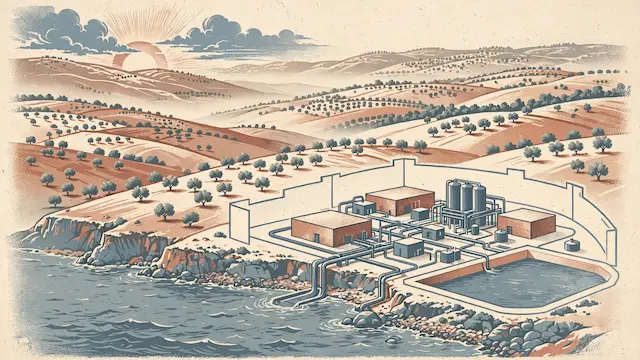
Israel's Ministry of Finance has initiated the tender process for a second desalination plant in the Western Galilee, designed to produce approximately 100 million cubic meters of water annually. This new facility will be located south of Nahariya, adjacent to another desalination plant already under construction. Upon completion of both plants, the site's total desalination capacity is expected to reach around 200 million cubic meters per year, supplying water to northern Israel and integrating into the national water system.
The first Western Galilee plant, awarded to IDE in November 2022, has faced significant delays, pushing back its water supply start date from the original 2025 target. The Ministry of Finance did not provide an operational timeline for the second plant. This initiative is part of a broader government plan to increase Israel's total desalination capacity from the current 800 million cubic meters per year to 1.5 billion cubic meters by the early to mid-2030s.
This expansion also includes completing the first Western Galilee plant, upgrading the Ashkelon desalination facility, and constructing a new plant in Emek Hefer. The Emek Hefer project, estimated at 5 to 6 billion shekels, has encountered opposition from the regional council, leading to a court petition against the tender process. The Ministry of Finance and the Water Authority state that expanding the desalination network is crucial to meet growing water demand due to population growth and climate change, reduce reliance on natural water sources, and enhance supply security during crises.
The new Western Galilee plant will operate under a public-private partnership model, with the selected concessionaire responsible for its planning, financing, construction, operation, and maintenance for 25 years. Michal Abadi-Boyang'o, the Accountant General, emphasized the necessity of building future water infrastructure today, while Water Authority Director Ezekiel Lipshitz highlighted the importance of diversifying and geographically distributing water sources for a stable water balance and operational resilience.
Mentioned
The same event, reported separately by each outlet. Open a few to compare what different newsrooms emphasize — and what they leave out.
Other 3


Not the same event — other stories that share this one’s people, places, or theme: background, reactions, and follow-ups.
