
Aura Stock Drops 7% Amid Skepticism Over Assisted Living Acquisition
Translated & summarized from Bizportal by baba
Aura's stock fell 7% after announcing the acquisition of assisted living facility Beit Bakfar for 1.7 billion shekels. Investors are concerned about the high price, increased debt, and the company's strategic shift from urban renewal. The deal involves a significant cash payment and share issuance, raising leverage concerns for Aura. Despite challenges in urban renewal, the assisted living sector shows strong demand.
The story in 5 lines · by baba
- Aura's stock dropped 7% following the announcement of a 1.7 billion shekel acquisition of Beit Bakfar.
- Market concerns include a high acquisition price and increased financial leverage for Aura.
- Investors question the strategic move into assisted living from urban renewal.
- The deal involves a significant cash payment and share dilution for existing shareholders.
- The urban renewal sector faces declining margins and sales, while assisted living demand is growing.
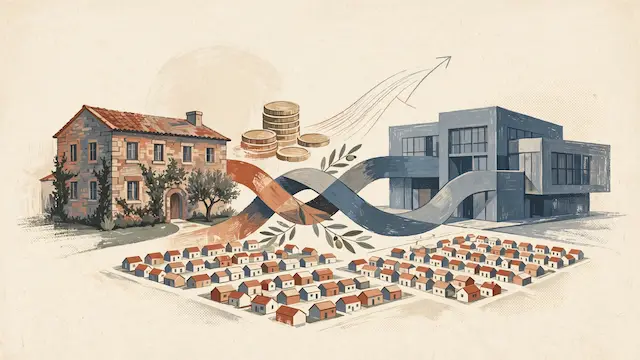
Aura, led by owner and manager Yaakov Atrakchi, is facing market skepticism following its announcement to acquire Beit Bakfar, an assisted living facility, for approximately 1.7 billion shekels. The market's concern stems from Aura committing a large payment upfront, while a significant portion of the acquisition's justification relies on future growth. Investors are questioning Atrakchi's strategic shift into assisted living, wondering if it signals a diversification away from urban renewal projects due to perceived risks in that sector.
The acquisition price is reportedly 82% higher than Beit Bakfar's value prior to the announcement. Although Beit Bakfar traded below its equity of about 1.3 billion shekels, the premium paid by Aura suggests they are paying in advance for potential appreciation. This is compounded by financing risks, as approximately 1.15 billion shekels will be paid in cash, with Aura securing preliminary agreements for bank financing for most of this sum. This will increase the company's debt and interest expenses, adding to its existing 94.3 million shekel interest costs in the first half of 2026. The remaining payment will be in shares, diluting existing shareholders' stakes, meaning the acquired business must justify this dilution as well.
Aura is already leveraged, and this deal further increases its financial leverage. The market is now focusing on these risks, despite Beit Bakfar's operations appearing more stable than urban renewal. The urban renewal sector is currently experiencing declining profit margins, difficulties in selling new apartments, and a reduction in deal volume, leading to contract cancellations as developers seek lower terms from residents to make projects economically viable.
Aura, as a large entity, is feeling these pressures. However, its diversification across different geographies and significant sales campaigns, including one that attracted hundreds of buyers, are mitigating the impact of the downturn in urban renewal. In contrast, the assisted living sector is experiencing growing demand, with new facilities being established at an accelerated pace. Beit Bakfar currently has 975 existing units and the potential for an additional 884 units.




