
Middle East Tensions Rise Amid Houthi Missile Attacks, US Warns of Iran Threats
Translated & summarized from 0404 by baba
Houthi rebels in Yemen claimed responsibility for missile attacks on Saudi airports and oil facilities, while the US warned of advanced Iranian plots against American citizens abroad. France saw massive protests with nearly a thousand arrests, and Russia and Ukraine are moving towards renewed peace talks with a limited local ceasefire. The escalating security situation in the Middle East raises concerns about global energy supplies and potential wider conflict.
The story in 5 lines · by baba
- Houthi rebels claimed missile attacks on Saudi airports and oil facilities, with the coalition intercepting some projectiles.
- The US issued an unusual warning about advanced Iranian plots to attack American citizens globally.
- France experienced large-scale protests with around 410,000 participants and nearly a thousand arrests.
- Russia and Ukraine agreed to a limited local ceasefire to allow humanitarian aid and evacuations.
- The escalating Middle East tensions could disrupt global oil supplies and impact energy prices.
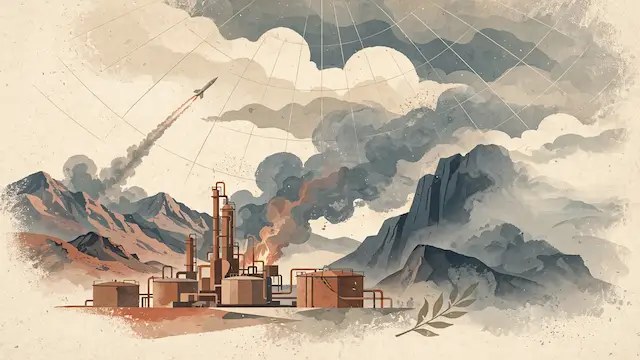
The security situation in the Middle East has escalated, with Houthi rebels in Yemen claiming responsibility for missile attacks targeting airports, oil facilities, and military bases in Saudi Arabia. Key targets reportedly included Riyadh and Dammam international airports, Aramco oil facilities, and oil pumping stations. The Saudi-led coalition announced it intercepted two ballistic missiles, with debris falling in several areas, though Saudi confirmation of all claimed hits is pending. The Houthis denied targeting the holy cities of Mecca and Medina, despite reports of alerts and missile fragments in those regions. Separately, Yemeni authorities reported three ballistic missiles struck Coast Guard facilities in Aden, causing structural damage.
The United States has issued an unusual security warning, based on intelligence indicating Iran is significantly increasing efforts to plan attacks against American citizens and government personnel abroad. US intelligence agencies have alerted Secretary of State Marco Rubio to advanced Iranian plots targeting Americans in the Middle East and other countries. In response, the US has heightened security for its missions and citizens in the region. President Donald Trump reiterated that military action against Iran remains an option if security interests are not met. Meanwhile, Iran's ambassador to Pakistan stated that Tehran is open to resuming talks with Washington, suggesting the reopening of the Strait of Hormuz in exchange for lifting the US naval blockade, though significant gaps remain.
In Europe, France experienced widespread protests with approximately 410,000 participants nationwide, including 110,000 in Paris. Protesters threw objects and fireworks at police, who responded with tear gas and water cannons, leading to nearly a thousand arrests. The protests, initially sparked by education system staffing shortages, have broadened to include concerns over the cost of living, inflation, and social inequality, posing a significant political challenge to President Emmanuel Macron.
Meanwhile, Russia and Ukraine are preparing for renewed peace talks, with preliminary agreements reached for a local ceasefire in Olsjky, southern Ukraine, to allow humanitarian aid and civilian evacuation. This limited agreement does not constitute a comprehensive ceasefire. Ukraine's satellite communication services, crucial for military operations, have also seen improvements after disruptions. Despite these developments, significant disagreements persist between Kyiv and Moscow regarding territory, security guarantees, and long-term peace terms.
The Houthi attacks on Saudi energy infrastructure, coupled with ongoing tensions in the Strait of Hormuz, raise concerns about further disruptions to global oil supplies and potential impacts on energy prices and international shipping costs. The full market reaction will become clearer as trading resumes, but the security escalation has increased uncertainty among investors and energy industry stakeholders. The coming days will focus on Saudi Arabia's response, US preparations against Iran, and diplomatic efforts to de-escalate the Middle East conflict, alongside monitoring the situation in France and the Russia-Ukraine peace talks.
Mentioned



