
Israeli-Born Oligarch Key to Russia's Sanctions Evasion Network
Translated & summarized from Bizportal by baba
An investigation revealed that the Russian payment network A7, co-founded by Israeli-born oligarch Ilan Shor, handled over $14 billion in cash rubles to circumvent sanctions. The network facilitated payments to Chinese suppliers, using cash collected from Moscow markets and intermediary companies. The U.S. Treasury designated A7 as a criminal organization, linking it to Iran and Hamas, and is proposing new rules to block its transactions. Shor has a history of fraud convictions in Moldova.
The story in 6 lines · by baba
- Russian payment network A7, linked to Israeli-born Ilan Shor, handled over $14 billion in cash rubles.
- The U.S. Treasury designated A7 as a significant transnational criminal organization for sanctions evasion.
- A7 facilitated payments to Chinese suppliers, obscuring the origin of funds through cash and intermediaries.
- The network is linked to Iran's central bank, Hamas, and North Korean crypto-heist operations.
- Oligarch Ilan Shor has a past conviction for fraud and money laundering in Moldova.
- The U.S. is proposing new rules to block A7's transactions by holding banks responsible.
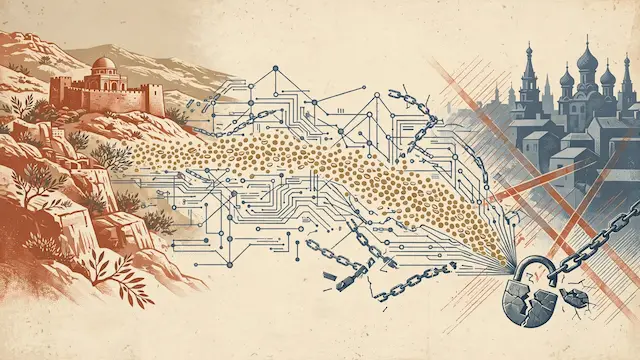
An investigation by the International Consortium of Investigative Journalists (ICIJ) and the independent Russian media outlet Proekt has revealed that the Russian payment network A7, designated a significant transnational criminal organization by the U.S. Treasury Department, handled at least 283 tons of cash rubles, valued at over $14 billion, between November 2024 and July 2025. The majority of these funds were ultimately sent to suppliers in China.
The network was officially established in September 2024 by Ilan Shor, an oligarch born in Israel with Israeli citizenship, and the state-owned Russian bank PSB, which serves the defense industry and is itself under sanctions. Shor holds a 51% stake in A7, with PSB holding the remainder. This system was built to circumvent international sanctions imposed on Russia following its invasion of Ukraine, which have cut off approximately 80% of Russian banks from the global SWIFT payment system.
According to internal documents, a significant portion of A7's operations relied on cash. Merchants from Moscow's wholesale markets, including the Sadovod market, collected cash from businesses. This cash was counted and registered at A7's cash center, then deposited into PSB. A series of intermediary companies, primarily registered in Kyrgyzstan, facilitated payments to suppliers in China and Hong Kong, obscuring the original source of the funds.
The U.S. Treasury described A7's method as a network of "sub-agents" using fraudulent trade documents to disguise Russian payments as regular transactions. The UK's National Crime Agency (NCA) reported that A7 boasted processing over $86 billion in transactions in its first year of operation. Beyond traditional bank transfers, A7 is also linked to A7A5, a stablecoin pegged to the ruble, used for large transfers outside the banking system.
The U.S. Treasury has linked A7 to Iran's central bank, the Revolutionary Guards, and Iran-backed organizations like Hamas. The network has also been connected to Iran's largest digital currency exchange, Nobitex, and North Korean crypto-heist operations. In response, the U.S. Treasury's Office of Foreign Assets Control (OFAC) designated A7 as a criminal organization, freezing its U.S. assets. The Financial Crimes Enforcement Network (FinCEN) proposed a rule to prohibit U.S. financial institutions from processing transactions involving A7's sub-agents and issued an alert to banks to identify suspicious activity.
Ilan Shor, 39, is a well-known figure in Moldova. Born in Israel, he moved to Chisinau in childhood and later entered politics, founding a populist party that was outlawed. In 2017, he was convicted of fraud and money laundering in a case involving the disappearance of nearly $1 billion from Moldovan banks and was sentenced to seven years. He fled to Israel, and in 2023, an appellate court increased his sentence to 15 years. He has since shifted his operational focus to Russia and appears regularly on state media there.
Mentioned



