
Israeli Election Campaigns Accused of Selling Illusions Amidst Deepening Divides
Translated & summarized from Kikar HaShabbat by baba
Israeli political campaigns are accused of selling illusions and making unrealistic promises as the nation heads to elections. Heated rhetoric and cynical tactics are prevalent, with parties like Shas focusing on internal unity and politicians debating sensitive security issues. A significant internal debate is occurring within the Haredi community, particularly among soldiers, regarding political representation and party loyalty. Tensions also persist between the Haredi and Religious Zionist communities, with calls for unity and understanding amidst political disagreements.
The story in 5 lines · by baba
- Israeli election campaigns are criticized for making unrealistic promises and selling illusions to voters.
- Parties are using cynical tactics, including shared enemies and security debates, to gain support.
- Haredi soldiers are experiencing internal debates about political representation and party loyalty.
- Tensions exist between the Haredi and Religious Zionist communities, with calls for reconciliation.
- Voters are urged to cast ballots based on conscience, emphasizing unity and brotherhood over division.
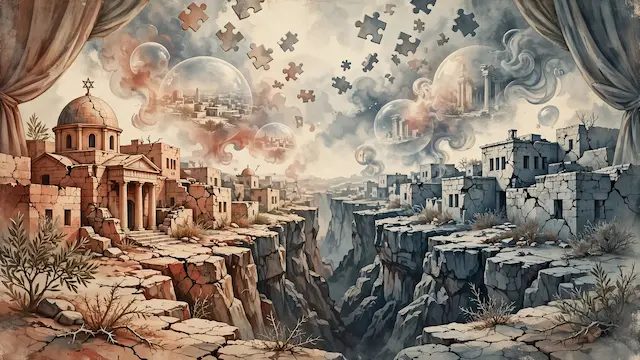
As Israel approaches an election, political rhetoric is reaching a fever pitch, with parties employing aggressive tactics and making grand promises to sway voters. The current political climate is described as suffocating, with all parties attempting to convince the public that this election is the most critical in the nation's history. This approach is likened to used car salesmen, offering extravagant guarantees that often fall short once the purchase is made, leaving voters disillusioned.
Campaigns are characterized by the cynical use of shared enemies and key figures. For instance, the Shas party is reportedly building its campaign around a struggle with the Attorney General to foster internal unity. Meanwhile, politicians from across the spectrum are engaged in heated debates over sensitive security issues, such as the timing of a potential strike in Iran, as evidenced by exchanges between Yair Lapid and Defense Minister Yisrael Katz. These campaigns are seen as selling dreams, like free gym memberships or political ice baths, with the public left to face reality afterward.
A significant portion of the article focuses on the internal discourse within the Haredi (ultra-Orthodox) community, particularly among Haredi soldiers serving in the IDF. These soldiers express a diverse range of political views, with some leaning towards Shas, others towards Itamar Ben-Gvir, and some considering economic parties or Leitner's faction. One soldier's stance against a blanket conscription law, while serving in the army, highlights the complex identity of this demographic. The most heated debate among these soldiers revolves around whether to support Yahadut HaTorah or Leitner, with differing views on representation and institutional support.
Further complicating the political landscape is the strained relationship between the Haredi and Religious Zionist communities. A statement in the Haredi newspaper 'Yated Ne'eman' labeling Religious Zionism as the "greatest trouble" for the Haredi public has been clarified by MK Moshe Gafni, who distinguished between the Religious Zionist party and its constituents, stating that the criticism was directed at the party's political actions, not the people themselves. Conversely, members of the Religious Zionist community express frustration, with many considering figures like Winter or Leitner in search of solutions to issues like Haredi conscription and security, feeling that old politics exacerbates divisions.
The article concludes by urging voters to approach the election with love and unity, emphasizing that despite political differences, Israelis must continue to live together harmoniously. It calls for voting based on conscience and values, viewing the ballot as a civic right and duty, not a reason to fracture brotherhood. The overarching message is to take a deep breath, as the election will soon be over, and to hope for a peaceful and positive outcome for all of Israel.
Mentioned




