
Egypt Fears Sinai Refugee Influx Could Spark Conflict With Israel
Translated & summarized from Cursorinfo by baba
Egyptian President Abdel Fattah el-Sisi fears a mass influx of Palestinian refugees from Gaza into Sinai could trigger clashes between Egyptian and Israeli forces. He discussed regional stability and Egypt's military buildup with Israeli Prime Minister Benjamin Netanyahu. Recent statements by Israeli Finance Minister Bezalel Smotrich have raised concerns in Cairo about potential shifts in Israeli policy regarding the Sinai. Egypt's rearmament is driven by fears of Israeli policy changes and potential refugee flows, alongside internal security needs and regional instability.
The story in 6 lines · by baba
- Egypt fears Palestinian refugee mass migration from Gaza into Sinai could cause clashes with IDF.
- President Sisi told PM Netanyahu that a Palestinian state would bring stability and regional integration.
- Israeli Finance Minister Smotrich's comments suggest a potential shift from the 1979 peace treaty terms.
- Egypt's military buildup is driven by fears of Israeli policy shifts and potential refugee crises.
- Egypt views Israeli stability as crucial for its own national security, especially after Oct 7.
- The primary danger to regional peace comes from radical elements, not moderate forces.
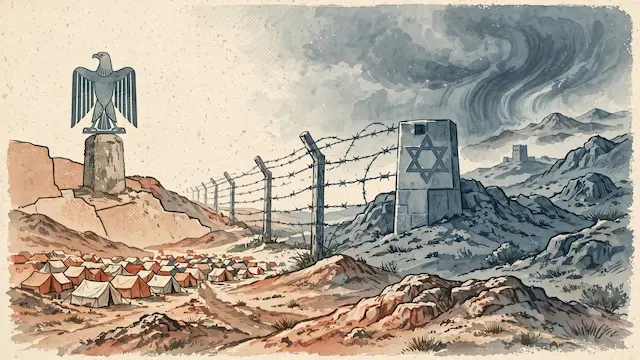
Egyptian President Abdel Fattah el-Sisi expressed concern that a mass migration of Palestinian refugees from Gaza into Sinai could lead to clashes between the Egyptian army and the IDF. Sisi made these remarks during a police academy graduation ceremony, noting the upcoming Israeli elections are a source of regional anxiety. He reiterated his past discussions with Israeli Prime Minister Benjamin Netanyahu, emphasizing that a Palestinian state would bring stability and regional integration, a point Netanyahu has not accepted. Sisi also recounted a conversation where Netanyahu questioned Egypt's armament, to which Sisi replied that Egypt needs to be strong for regional peace and does not perceive Israel's military power as a threat, expecting the same from Israel.
According to commentator Jackie Hugi, Sisi's anecdote offers insight into high-level discussions between the two nations. Hugi suggests Netanyahu's question reflects Israeli concerns about Egypt's military buildup in Sinai, a concern that persists despite ongoing security cooperation, with underlying mutual suspicion. Hugi posits that Egypt's rearmament is partly due to Israel's perceived preference for military solutions over diplomacy, compelling Egypt to keep pace with its powerful neighbor.
Recent statements by Israeli Finance Minister Bezalel Smotrich, suggesting Israel would not have to withdraw from Sinai again under current leadership, have alarmed Cairo. Hugi interprets Smotrich's comment, "There will be no more Begin," as an indication of a shift in Israeli policy away from the 1979 peace treaty terms. While Cairo acknowledges Israel is unlikely to attack Egypt directly, concerns remain about future governments, particularly those led by the far-right, and potential scenarios involving Palestinian actions.
One significant worry for Egypt, dating back to the Mubarak era, involves thousands of Gazan refugees breaching the border into Sinai, potentially drawing Egyptian forces into conflict with the IDF. Hugi notes that while such scenarios once seemed improbable, they are now considered a possibility. Egypt's military strengthening is driven by these fears, but also by the internal instability it experienced after 2011, the perceived unreliability of some neighbors, and the need to maintain internal order and the regime's power, supported by financial aid from Saudi Arabia and the UAE, and military assistance from Israel against Sinai jihadists.
Hugi argues that Egypt currently has no practical interest in attacking Israel, recognizing the IDF's capabilities and the likely negative outcome for Egypt. Stability in Israel is seen as crucial for Egypt's own national security, especially after the October 7th attacks highlighted how instability on Israel's border threatens its neighbors. The peace agreements with Egypt and Jordan proved their value during the Gaza war, with Jordan maintaining border calm and Egypt coordinating with Israel while managing its own security concerns. Hugi concludes that the legacy of Menachem Begin and Anwar Sadat will endure as long as moderate leadership prevails in Israel and stability holds in Egypt, with the primary danger coming from radical elements or the erosion of existing orders.
Mentioned
Not the same event — other stories that share this one’s people, places, or theme: background, reactions, and follow-ups.
