
Firefighter's Lung Damage Recognized as Work Injury After Court Battle
Translated & summarized from Bizportal by baba
A firefighter from Rishon LeZion, who suffered lung damage from years of exposure to smoke, has been recognized as a work injury victim by the Regional Labor Court in Tel Aviv. The court overturned the National Insurance Institute's denial, ruling his work conditions caused the impairment and ordering the Institute to pay him 7,000 shekels in costs. The decision, based on conflicting medical expert opinions, may pave the way for similar claims from other firefighters and grants him access to disability payments.
The story in 6 lines · by baba
- A firefighter's lung damage was recognized as a work injury by the Regional Labor Court in Tel Aviv.
- The court overturned the National Insurance Institute's denial of the firefighter's claim.
- The Institute was ordered to pay the firefighter 7,000 shekels in expenses and legal fees.
- Conflicting medical expert opinions were central to the court's decision.
- The ruling may impact future claims from other firefighters exposed to smoke.
- The firefighter is now eligible for disability payments and a pension assessment.
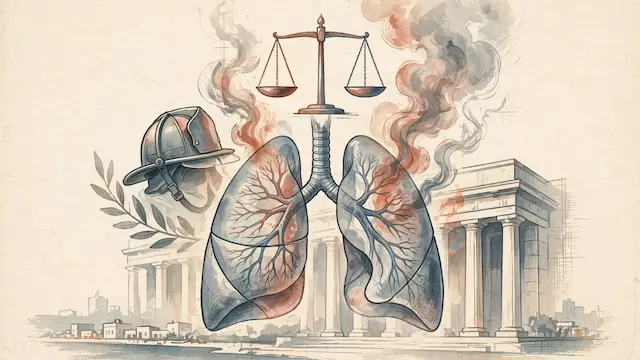
A firefighter from Rishon LeZion, who worked for many years exposed to smoke and combustion byproducts, has been recognized as a work injury victim due to lung damage. The Regional Labor Court in Tel Aviv overturned a previous denial by the National Insurance Institute (Bituah Leumi), ruling that his working conditions caused the impairment. The Institute was ordered to pay him 7,000 shekels in expenses and legal fees, plus interest.
The firefighter, born in 1956, served in two periods: 1978-1985 and 1998 until his illness was diagnosed. He participated almost daily in extinguishing various fires, from brush and forest fires to those involving homes, cars, and factories, including fires of rubber, plastic, and fuel. He used breathing apparatus intermittently and rarely in open areas. He never smoked himself.
In 2018, a CT scan revealed fibrotic and emphysematous changes in his lungs, followed by symptoms of dry cough, chest pain, and shortness of breath. The National Insurance Institute denied his claim in 2021, prompting him to appeal to the court.
The case involved conflicting medical opinions. The court appointed three medical experts. While the first expert found no evidence of asthma or other lung disease, two subsequent experts determined a causal link between his work and the lung damage, including occupational asthma. The Institute argued the impairment stemmed from a diaphragmatic hernia, not smoke exposure, and questioned the third expert's assessment of exposure levels.
However, Judge Daphna Chason Zecharia and the public representatives rejected these arguments. They noted the first expert's conclusions contradicted CT findings and positive methacholine challenge tests indicating hyperreactive airways. The other two experts concluded that while the hernia and reflux might explain some symptoms, they did not account for the tissue damage itself. The court also cited legal precedent: when two equally weighted expert opinions conflict, the one favoring the insured is preferred, as doubt benefits the claimant. In this instance, the court found two opinions supporting the firefighter against one.
This recognition as a work injury victim opens the door for disability payments and a review of work disability percentages, which determine potential grants or monthly pensions. The ruling, issued in late August, may also be relevant for other firefighters, particularly those who served when protective equipment was less advanced. Both parties have 30 days to appeal to the National Labor Court.
Mentioned
The same event, reported separately by each outlet. Open a few to compare what different newsrooms emphasize — and what they leave out.
Other 2
