
Netanyahu's Leadership Under Fire Amidst Legal Woes and Public Division
Translated & summarized from Walla by baba
Prime Minister Benjamin Netanyahu's leadership is criticized for being detrimental to Israel due to his legal challenges and divisive impact, despite strong voter loyalty. The article questions the suitability of a leader facing criminal charges and highlights his alleged negative influence on the judiciary and international relations. It urges voters to remove him from office, comparing his situation to a "toxic brand" that needs replacing for the nation's future.
The story in 5 lines · by baba
- Prime Minister Benjamin Netanyahu faces criticism for his leadership amid legal battles and public division.
- A segment of the electorate shows unwavering loyalty to Netanyahu, often using the slogan "Only Bibi."
- The article questions the appropriateness of a prime minister facing criminal charges for bribery and fraud.
- Netanyahu's leadership is accused of fostering a "toxic environment" and damaging Israel's international standing.
- The piece urges voters to remove Netanyahu from office, framing him as a "toxic brand" needing replacement.
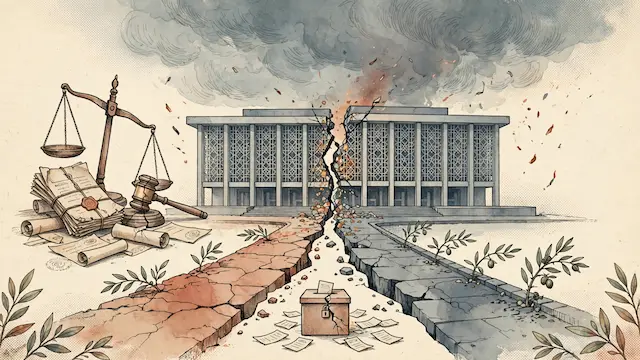
The article critiques Prime Minister Benjamin Netanyahu's prolonged tenure, suggesting his leadership is detrimental to Israel due to his ongoing legal battles and divisive impact on the nation. It highlights the unwavering support he receives from a segment of the electorate, often expressed with the slogan "Only Bibi," comparing it to the phenomenon surrounding Donald Trump. This loyalty, the piece argues, remains impervious to governmental or personal failures.
Foreign Minister Gideon Saar is mentioned as a key figure within Likud who maintains a working relationship with Netanyahu, despite having previously challenged him. Saar's focus on the Iranian nuclear threat and the Palestinian state issue is noted as aligning with Netanyahu's political agenda, though these issues have been long-standing concerns.
The author questions the appropriateness of a prime minister facing criminal charges for bribery, fraud, and breach of trust, referencing the Supreme Court's decision allowing Netanyahu to continue serving. The article asserts that this dual role has proven unmanageable, with Netanyahu's court appearances often managed for convenience and his attacks on the judiciary seen as stemming from his legal predicament rather than ideology.
Furthermore, the piece alleges that Netanyahu's leadership has fostered a "toxic environment" and made Israel a pariah state internationally, citing a potential international arrest warrant from The Hague. It also touches upon accusations of his inner circle's involvement in the "Qatar Gate" affair and alleged alterations to protocols concerning the October 7th attacks, suggesting a pattern of distrust and dishonesty.
The article concludes by urging voters to reject Netanyahu, framing him as a "toxic brand" and a "weight" on Israel's international standing. It calls for his removal, akin to a "building renovation plan," to allow for a new hope for the country, suggesting that even after a potential election loss, he might seek a plea deal. The author implores citizens to vote to avoid further damage and "bring the day" of change.
Mentioned

