
US Updates Travel Advisories for Middle East Amid Increased Regional Threats
Translated & summarized from Channel 13 by baba
The U.S. has updated travel advisories for the Middle East, including Israel, citing increased regional threats from Iran-backed Houthis and intelligence on Iranian attack plans. Israeli forces conducted a counter-terrorism operation in Hebron following a deadly encounter, arresting dozens of suspects in Judea and Samaria. Thousands protested in Tel Aviv for a state inquiry into the "massacre" ahead of elections. Hezbollah reportedly pledged not to intervene in a conflict involving Iran if the U.S. attacks.
The story in 5 lines · by baba
- US updates travel advisories for Israel and Gulf states due to increased regional threats from Iran-backed Houthis.
- US intelligence suggests Iran is planning attacks against Americans, leading to heightened security alerts.
- Israeli forces killed two terrorists crossing from Gaza and conducted a counter-terrorism operation in Hebron.
- Thousands protested in Tel Aviv demanding a state inquiry into the "massacre" ahead of elections.
- Hezbollah reportedly pledged not to intervene in a conflict involving Iran if the US attacks.
The United States has updated its travel warnings for citizens, advising against travel to Gulf and Middle Eastern countries, including Israel, Saudi Arabia, Qatar, the United Arab Emirates, Iraq, and Lebanon. This advisory is due to "an increased regional aggression threat from the Houthis, supported by Iran," according to a report by Al-Mamlakah channel. The New York Times also reported that the U.S. government has raised its alert level for employees across the Middle East and reduced staff at embassies and consulates, based on intelligence indicating Iran is in the advanced stages of planning attacks against Americans.
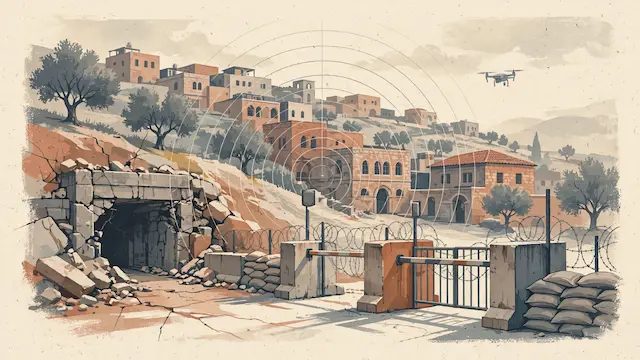
In parallel, Israeli security forces conducted a counter-terrorism operation in Hebron, following an encounter where two soldiers, Sgt. Maj. Ron Yonatan Reitman and Sgt. Yuval Shai Suilam, were killed and others wounded. The operation, which is expected to last several days, involves a thorough search of infrastructure to neutralize terror elements and interrogate dozens of suspects. During the weekend, IDF, Border Police, and Shin Bet forces arrested approximately 40 suspects, including Hamas and Islamic Jihad operatives, for incitement, disturbances, and stone-throwing across 40 villages in Judea and Samaria.
In other security developments, the IDF reported that its air force security forces found three balloons near a military base in southern Israel. Attached to the balloons were packages containing suspected drugs and tobacco products. Additionally, IDF forces identified and neutralized two terrorists who crossed the Gaza border into Israel from the north and south.
Meanwhile, thousands protested in Tel Aviv, calling for a state inquiry commission into the "massacre," three days before elections. Rabbi Elhanan Danino, who lost his son Uri, stated, "A nation that does not investigate its past abandons its future." Mali Zander, whose granddaughter Noa was murdered, questioned, "How is it that three years later, there is no one to be held accountable?"
Further regional reports indicate that Hezbollah has pledged not to intervene in a potential conflict involving Iran if the U.S. attacks after the November 6 midterm elections, according to Saudi newspaper Asharq Al-Awsat. The Jordanian Al-Mamlakah channel also reported that the death toll from a church attack in Jordan's Karak province rose to eight.
Mentioned
The same event, reported separately by each outlet. Open a few to compare what different newsrooms emphasize — and what they leave out.
Left 1Centre 7Right 6Haredi 2Arab 5Other 4



























Not the same event — other stories that share this one’s people, places, or theme: background, reactions, and follow-ups.
