
Israeli Political System Braces for Potential Repeat Elections Amidst Stalemate
Translated & summarized from Maariv by baba
Israel's political system is preparing for the possibility of repeat elections as no bloc is projected to secure a clear majority in the upcoming Knesset elections. Potential governmental stalemates could lead to prolonged negotiations, unity government proposals, or a continuation of the current government under Prime Minister Benjamin Netanyahu. Efforts are underway to safeguard the electoral process against misinformation and disruptions, with the final results potentially delayed by the counting of double envelopes.
The story in 6 lines · by baba
- Israeli political system faces potential repeat elections due to expected governmental deadlock.
- No bloc is projected to achieve the 61-seat majority needed to form a government.
- Prime Minister Benjamin Netanyahu could remain in office under governmental continuity if no alternative is formed.
- President Isaac Herzog will manage coalition talks but cannot force agreements.
- Measures are in place to protect the election process from misinformation and disruptions.
- The final results may be delayed by the counting of approximately 650,000 double envelopes.
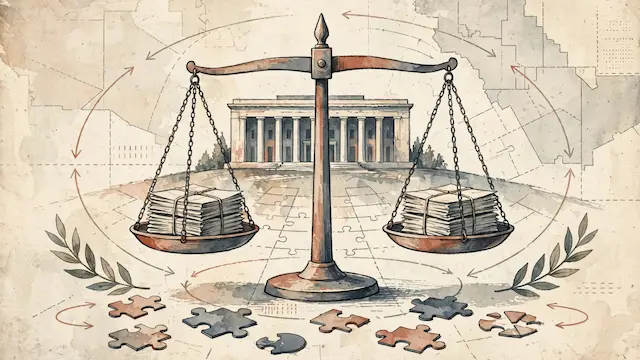
With Israel's 26th Knesset elections just days away, the political establishment is already contemplating the possibility of a repeat election due to a potential governmental deadlock. Despite polls indicating a lead for the bloc opposing Prime Minister Benjamin Netanyahu, neither side appears poised to secure the 61-seat majority needed to form a government based on current alignments. The outcome could hinge on the electoral threshold and a small number of votes, potentially delaying the formation of a new government or triggering another election cycle.
Several difficult political scenarios are on the table if no bloc achieves a clear majority. These include a unity government led by Netanyahu, a broad coalition under an opposition leader, the integration of some Likud members without Netanyahu, or a minority government relying on external support. The public and political pressure on party leaders is expected to intensify if no consensus is reached, forcing those who pledged not to sit with Netanyahu to justify the risk of further elections. Similarly, those advocating for a purely Zionist government will face questions about supporting a minority government, while proponents of a unity government must address how to overcome deep-seated political animosity.
While President Isaac Herzog is preparing to manage the post-election coalition-building process and has stated his intention to prevent repeat elections, his role is limited to encouraging dialogue rather than imposing agreements. The President's residence is anticipated to become a focal point of political maneuvering. Meanwhile, Netanyahu, under the principle of governmental continuity, can remain in office even without a 61-seat majority as long as no alternative government is formed, granting him a significant political advantage in a stalemate.
The electoral process itself is under scrutiny, with efforts to counter misinformation and ensure the integrity of the vote. The National Cyber Directorate and the Central Elections Committee are implementing "Election Shield" to combat system disruptions, impersonation, and undermining public trust. The use of paper ballots, while hindering covert digital manipulation, does not prevent attacks on supporting systems or the spread of false claims about fraud. The final results may be delayed until the counting of approximately 650,000 double envelopes, which could significantly influence the final seat distribution, especially for parties near the electoral threshold.
Mentioned




