
Israel Continues Twice-Yearly Clock Changes Amid Debate
Translated & summarized from Mako by baba
Israel will revert to standard time this weekend, continuing its practice of twice-yearly clock changes despite ongoing debate. Proponents cite benefits for evening activities and business, while religious groups have concerns about morning prayer times. However, biological clock experts warn that permanent daylight saving time could harm sleep and health, favoring standard time. Other countries also grapple with the issue, with mixed approaches globally.
The story in 5 lines · by baba
- Israel will switch back to standard time this weekend, continuing its biannual clock changes.
- Proponents of permanent daylight saving time cite benefits for evening activities and business.
- Religious groups have historically opposed extended daylight saving due to morning prayer schedules.
- Biological clock experts warn permanent daylight saving time could negatively impact sleep and health.
- Other countries, including the EU and Mexico, have considered or implemented changes to seasonal clock adjustments.
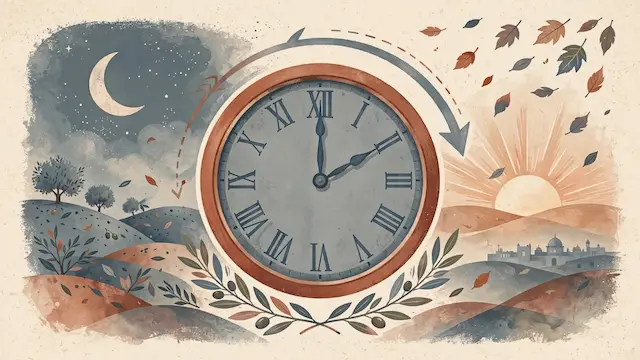
Israel will once again adjust its clocks backward by one hour this weekend, marking the return to standard time and earlier sunsets. This annual transition reignites the long-standing debate in Israel over whether to abolish the twice-yearly clock changes and adopt permanent daylight saving time.
The discussion is deeply intertwined with religious, political, and health considerations. Proponents of permanent daylight saving time argue for extended evening daylight, which could encourage outdoor family activities, boost physical fitness, and benefit leisure and tourism industries. Business groups, including the Manufacturers Association of Israel, have also supported longer daylight saving, citing potential increases in productivity and reduced electricity consumption.
However, religious arguments have historically played a significant role. The timing of the morning prayer, Shacharit, which ideally begins at sunrise according to Jewish law, is complicated by daylight saving time extending into autumn. A later sunrise on the clock makes it difficult for observant Jews to pray and commute to work on time, a concern that has been raised by religious parties in past legislative debates.
Biologically, experts warn that permanent daylight saving time could be detrimental to health. Professor Eran Tauber, head of the biological clock research lab at the University of Haifa, states that the standard time (winter clock) better synchronizes the body's internal clock with the natural light-dark cycle. He notes a broad consensus among sleep and biological clock researchers that permanent daylight saving time may negatively impact sleep quality and overall health, potentially leading to chronic sleep deprivation.
Globally, there is no uniform approach. The European Union proposed ending seasonal clock changes, but member states have not reached an agreement. The United States largely maintains the practice, though Hawaii and most of Arizona do not observe daylight saving time. Mexico abolished it in most of the country in 2022. Despite ongoing debate and past legislative attempts, including a 2013 law extending daylight saving time and a 2025 bill to abolish winter time, Israel continues its biannual clock adjustments.
Mentioned
The same event, reported separately by each outlet. Open a few to compare what different newsrooms emphasize — and what they leave out.
Centre 3Right 1Other 1





Not the same event — other stories that share this one’s people, places, or theme: background, reactions, and follow-ups.




