
Election Day Rules Clarified for Israeli Workers and Employers
Translated & summarized from i24NEWS by baba
Israel's Chief Labor Relations Officer, Rivka Rabiner, released guidelines for the upcoming election day, which is a public holiday except for essential services. Workers employed for at least 14 consecutive days before the election are entitled to their regular pay. Those working on election day typically receive double pay or regular pay plus time off, though foreign workers in certain sectors may only receive regular pay unless otherwise stipulated.
The story in 5 lines · by baba
- Election day is a public holiday in Israel, with exceptions for essential services.
- Workers employed for at least 14 consecutive days before elections get regular pay.
- Employees working on election day usually receive 200% pay or regular pay plus time off.
- Foreign workers in specific sectors may only be entitled to regular pay for election day work.
- Workers hired specifically for election day duties have unique payment and work hour arrangements.
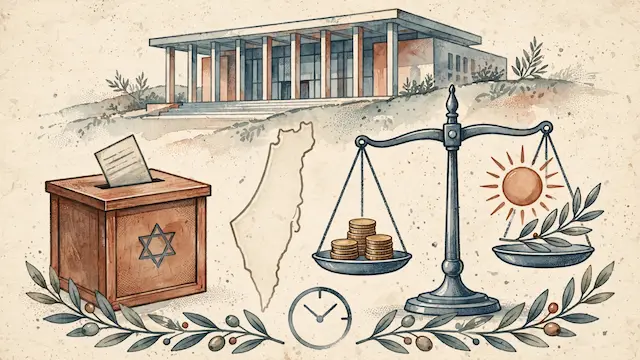
Ahead of the upcoming 26th Knesset elections, Rivka Rabiner, the Chief Labor Relations Officer at the Ministry of Labor, has issued guidelines detailing workers' rights and employer obligations for election day. The law designates election day as a public holiday, with exceptions for essential public services that will continue to operate.
These essential services include election committee and party workers, transportation, parking lots and gas stations, restaurants and cafes, hotels, continuous production factories, communication, water, and electricity services, cinemas, press, radio and television, health services, security forces, and rescue services. Workers in these sectors must be allowed to vote.
Employees who have worked for the same employer for at least 14 consecutive days prior to election day are entitled to their regular salary as if it were a holiday. While the law does not explicitly state the pay rate for those working on election day, established practice, court rulings, and collective agreements generally dictate that employers pay 200% of the regular salary or provide regular pay plus compensatory time off. However, some regional court decisions have ruled for regular pay only, leaving the matter unsettled by the National Labor Court.
This payment structure applies to workers in essential services and any other employees asked to work and who agreed. In contrast, foreign workers in specific sectors such as nursing, hotels, catering, construction, agriculture, and industry are legally entitled to only their regular salary for working on election day, unless a more favorable agreement is in place. Workers hired specifically for election day duties, like poll committee members or observers, have unique arrangements, including exemption from standard working hours and rest regulations, with their payment potentially delayed up to 60 days after the election.
The same event, reported separately by each outlet. Open a few to compare what different newsrooms emphasize — and what they leave out.
Left 1Centre 1Other 1


Not the same event — other stories that share this one’s people, places, or theme: background, reactions, and follow-ups.



