
Israel Halts National Education Tests Amidst Widespread Systemic Failures
Translated & summarized from Makor Rishon by baba
Israel's Minister of Education, Yoav Kisch, has canceled upcoming national "Tnu'fa" exams due to concerns about their presentation and reliability, despite an examiner finding them valid. This occurs amidst a backdrop of declining student performance on national and international tests, a severe teacher shortage, and overcrowded classrooms. The decision removes a key metric for assessing educational progress, highlighting systemic issues within the Israeli education system.
The story in 6 lines · by baba
- Education Minister Yoav Kisch canceled national "Tnu'fa" exams, citing concerns despite a report deeming them reliable.
- Recent national and international tests show sharp declines in Israeli student performance across subjects.
- The Israeli education system faces a significant shortage of teachers and overcrowded classrooms.
- Teacher satisfaction with work is high, but satisfaction with salary is low.
- Student violence and feelings of disconnect from school are significant issues reported.
- Israel dedicates a high percentage of GDP to education but spends less per student than the OECD average.
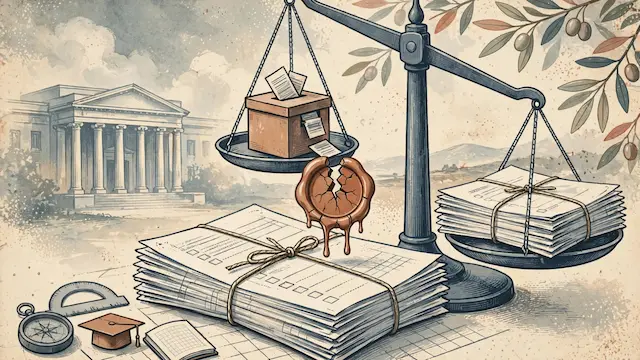
Education Minister Yoav Kisch has ordered the cancellation of upcoming national "Tnu'fa" (formerly Mitzav) exams in mathematics, language, science, and English, and has refused to cooperate with the Ramah agency responsible for them. This decision follows a report by an examiner appointed by Kisch, Professor Ami Moyal, who found the recent "Tnu'fa" test results to be reliable, despite noting issues with how they were presented. Moyal indicated that students not achieving the highest level were depicted as failing to meet requirements, even if they mastered basic material.
The cancellation comes after a year marked by alarmingly low test scores. In the "Tnu'fa" exams for ninth graders, only 3% met the ministry's standards in science, 22% in English, and 38% in their native language. International PISA test results from March 2025 also showed sharp declines, with Israel scoring 436 in reading (below the OECD average of 463), 442 in science (below the OECD average of 484), and 433 in mathematics (below the OECD average of 465). These results represent significant drops since 2022, placing Israel among countries with the steepest score declines globally.
The Israeli education system is currently grappling with a severe shortage of teachers and classrooms. The cancellation of the "Tnu'fa" exams removes a key tool for measuring progress towards educational goals. Data from the Knesset Research and Information Center indicates that over 21.5% of new teachers leave the profession within five years, and 12.2% leave in the first year. Furthermore, the number of graduates from teacher training programs has hit a ten-year low, with approximately 3000 graduates not entering the education system at all.
Classroom overcrowding is another significant issue, with an average of 27.2 students in elementary schools and 30 in middle schools, considerably higher than the OECD average. Despite Israel dedicating a higher percentage of its GDP to education than the OECD average (7.4% vs. 5.5%), per-student spending is lower ($10,900 vs. $13,600). A recent report also highlighted deficiencies in remote learning capabilities in schools, with 72% lacking equipment for students and 48% lacking it for teachers.
Teacher satisfaction with their work is high (93%), but satisfaction with salary is low (34%), though average teacher salaries are slightly above the national average. A significant pay gap exists between new and veteran teachers, with new teachers earning only about 45% of what experienced teachers earn. The article also notes that 19% of students reported experiencing some form of violence frequently in the past year, with higher rates in elementary schools.
Mentioned
The same event, reported separately by each outlet. Open a few to compare what different newsrooms emphasize — and what they leave out.
Centre 2Right 1Arab 1Other 1





Not the same event — other stories that share this one’s people, places, or theme: background, reactions, and follow-ups.




