
Europe Ignores Israel's War Lessons, Embraces 'Culture of Death'
Translated & summarized from Makor Rishon by baba
The article argues that European protests adopting Palestinian flags and intifada slogans indicate Europe is becoming a party to the conflict with Israel, embracing a 'culture of death.' It criticizes this strategy, which uses human shields and disregards the will to live, as a policy of elected Palestinian leadership. The author defends Israel's actions in Gaza as necessary to protect lives and suggests Europe should learn from Israel's experience rather than reward those who glorify death, warning that the intifada threat is already on Europe's doorstep.
The story in 6 lines · by baba
- European protests adopting Palestinian flags and intifada slogans mark a shift, making Europe a party to the conflict with Israel.
- The intifada is described as an unconventional warfare strategy that glorifies death and uses children as human shields.
- The article criticizes Palestinian leadership for institutionalizing payments for terrorism and using civilians as shields.
- Examples of intifada-like calls and actions are cited in Bologna, Amsterdam, London, Brussels, and Paris.
- Israel's actions in Gaza are defended as a necessary choice to prioritize human lives over property.
- Europe is urged to learn from Israel's experience in combating this threat rather than rewarding it.
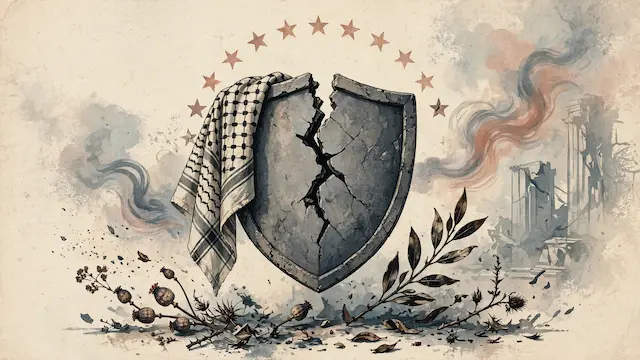
Palestinian flags and calls for an 'intifada' in European cities this fall signal a shift in the international standing of Israel, according to the article. It argues that Europe, by adopting the language and symbols of the intifada, is becoming a party to the conflict rather than an impartial observer. The author defines the intifada not as a mere uprising but as an unconventional warfare strategy that glorifies death, uses children as human shields, and undermines the principles of warfare and deterrence by disregarding the will to live.
The article contends that this approach is not limited to rogue organizations but is a policy of democratically elected leaderships, citing the Palestinian Authority's payments to families of terrorists as evidence of a society embracing a 'culture of death.' Examples cited include calls for 'intifada until victory' in Bologna, support for Hamas and burning of Israeli flags in Amsterdam, intifada calls in London and Brussels, and Palestinian flags alongside antisemitic slogans and synagogue vandalism in Paris during protests against the cost of living.
The author asserts that the true threat is not immigration itself but the movement and culture adopting the intifada, which could infiltrate democratic protests. The piece criticizes the notion that these actions are solely the work of terrorist groups, emphasizing that elected leaderships have institutionalized policies like paying bounties for murder and using human shields. This strategy, it claims, defies the fundamental instincts of self-preservation and the protection of one's children.
The article draws a parallel between the current situation and the Second Intifada, noting the use of tunnels under schools and hospitals in Gaza. It defends Israel's extensive destruction in Gaza as a necessary measure to prevent fighter casualties by avoiding tunnels, framing it as a choice between losing homes and losing lives, with Israel rightly choosing life. The responsibility, it argues, lies with those who place civilians as shields.
If Europe imposes a state on those who 'glorify death,' the message will be that the intifada is worthwhile. The article posits that Israel's struggle is not merely its own problem but Europe's front-line defense. It suggests that Europe, unlike Germany and Japan which underwent denazification, is now forgiving Palestinians for actions for which others were held accountable, even rewarding them. Israel offers Europe partnership based on its experience in identifying and suppressing such methods while maintaining humanity. However, the article concludes that Israel itself is not adequately prepared for this 'eighth arena,' lacking a dedicated command and doctrine, and must first address Jewish nationalist crime in Judea and Samaria.