
Israel's Economy Faces Mounting Structural Pressures
Translated & summarized from Arab48 by baba
Israel's economy is facing mounting structural pressures due to increased security spending, a slowdown in the high-tech sector, and demographic shifts. The defense budget has more than doubled since October 2023, leading to cuts in civilian programs and services. Unemployment is rising in key sectors like IT and management, while the Haredi community's low labor participation poses a long-term fiscal challenge. These factors combined could hinder economic growth and the ability to finance future security needs.
The story in 5 lines · by baba
- Israel's defense budget has more than doubled since October 2023, impacting civilian spending.
- Unemployment is rising sharply in Israel's IT, software, management, sales, and marketing sectors.
- Haredi men's low labor participation and productivity pose a significant long-term economic challenge.
- Government cuts have diverted funds from Arab community development and civilian programs to security needs.
- Economic pressures could limit growth and the ability to finance future security obligations.
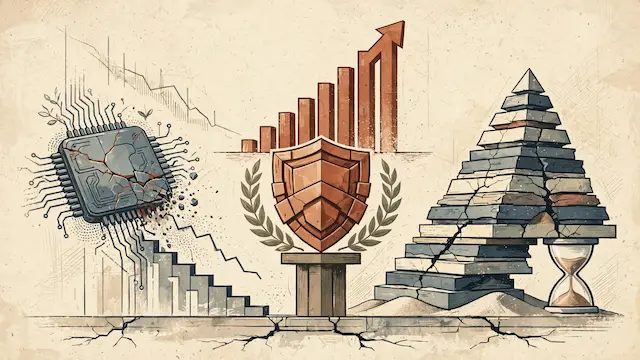
Recent economic developments and reports indicate that Israel's economy is increasingly feeling the cumulative effects of recent wars. While the economy has shown resilience, its capacity to sustain these burdens without escalating costs and long-term negative impacts is questionable. These repercussions are amplified by deeper economic and demographic shifts that could hinder high growth rates and the financial resources needed for security and military expenses, alongside ongoing occupation and settlement activities.
Significant budget cuts have been made to fund security needs. The defense budget has surged since October 2023, rising from approximately 63 billion shekels in 2023 to over 142 billion shekels for 2026, more than doubling its pre-war level. The security burden on the economy has also increased from about 4.2% of GDP in 2022 to over 8% during the war. The government has financed these increases through higher deficits, increased debt, budget reallocation, and cuts to civilian spending. The military has requested additional funds for equipment, including a billion-dollar deal for Apache helicopters.
With elections approaching, expanding the deficit has become more complex, leading the government to seek funds from within the existing budget. This has resulted in cuts to civilian programs, including approximately 1 billion shekels from a multi-year plan for the Arab community's economic and social development, and another 497 million shekels from a plan for Arab community development diverted to police and the Shin Bet for crime fighting. An additional 4.9% cut across many civilian ministries, totaling about 2.6 billion shekels, has affected education, health, welfare, and transportation, as well as reconstruction programs. Notably, coalition funds for the Haredi community and West Bank settlements were excluded from these cuts, indicating that increased security spending is directly impacting civilian services.
Unemployment is affecting key sectors of the Israeli economy. A September report from the Israel Employment Service revealed a sharp rise in unemployment among software, IT, management, sales, and marketing professionals, sectors previously considered strong and stable. While the overall number of job seekers decreased in September, unemployment in the IT sector rose by 59.3% compared to September 2023. The management, sales, and marketing sectors also saw a 29.6% increase in unemployment. This coincides with a decline in demand for highly skilled workers, with a drop in job openings for software developers and engineers.
The Haredi community presents a growing economic challenge. Reports from the Ministry of Finance and Bank of Israel highlight the long-term economic implications of low labor force participation, particularly among Haredi men, coupled with low productivity and education levels. Projections suggest an annual economic cost of up to 250 billion shekels by 2050 due to slower growth and increased welfare payments. The Haredi population is projected to grow significantly, potentially surpassing the Arab population by 2043. However, this demographic growth is not matched by labor market participation; Haredi men's employment has remained around 52% for the past decade, with an average income significantly lower than non-Haredi Jewish workers. This lack of integration could lead to an annual GDP loss of about 160 billion shekels by 2050. Haredi households, on average, register a net deficit in state contributions, unlike non-Haredi Jewish and Arab households. If current trends continue, the state may need to reduce public services and raise taxes, potentially increasing VAT to at least 22% and raising income tax.
These accumulating pressures could limit Israel's economic growth and its ability to finance current security burdens. Increased military spending is directly impacting civilian budgets and services that contribute to long-term productivity and growth. This is occurring alongside a slowdown in sectors like high-tech and software, and demographic shifts that may reduce the future workforce and tax base. The government's continued funding of coalition-related items for the Haredi community and settlements, alongside security demands, suggests a lack of fundamental re-prioritization. Without a review of these priorities, current pressures could transition from temporary war costs to structural challenges impacting the economy's long-term growth and ability to meet its obligations.
Mentioned




