Israel Approves National Strategy to Combat Flood Risks
Translated & summarized from JDN by baba
Israel has approved a comprehensive national strategic plan to manage flood risks, aiming to improve preparedness and reduce dangers from extreme weather. The plan, developed by multiple ministries and local authorities, includes a central runoff management mechanism and an update to the 1957 Drainage and Flood Prevention Law. It also features dedicated funding for infrastructure and enhanced emergency response, including public warnings and flood prediction models.
The story in 5 lines · by baba
- Israel approved a national strategic plan to manage flood risks and improve preparedness for extreme weather.
- The plan establishes a central regulatory mechanism for runoff management and inter-authority coordination.
- A key element is updating the 1957 Drainage and Flood Prevention Law to suit current needs.
- Dedicated funding will support drainage infrastructure, particularly for weaker local authorities.
- Emergency preparedness will be enhanced with a national operational plan and improved public warning systems.
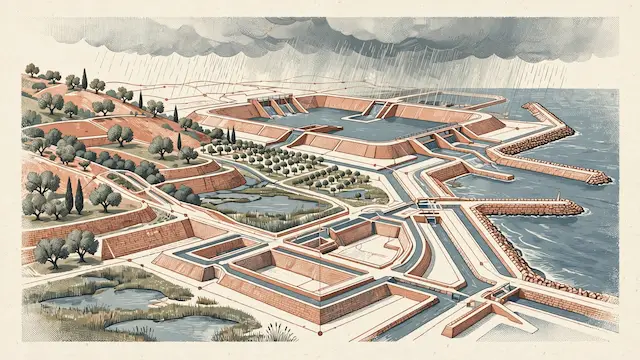
A comprehensive national strategic plan to manage flood risks in Israel has been approved by a director-generals' committee headed by the Prime Minister's Office. The plan aims to enhance the country's preparedness for flood events, reduce risks to life and property, and bolster the capacity of authorities to handle extreme weather. Developed through inter-ministerial cooperation led by the Prime Minister's Office, with participation from the Ministries of Agriculture and Food Security, the Planning Administration, and the National Security Ministry, along with local government bodies, the strategy introduces a central regulatory mechanism for runoff management. This mechanism will standardize the field and coordinate various entities, establishing a uniform policy and clarifying responsibilities for shared solutions to manage rainwater and mitigate flood dangers across entire regions, not just within individual local authorities.
A key component involves updating the 1957 Drainage and Flood Prevention Law. The Ministry of Agriculture and Food Security will lead the drafting of a bill to align the legal framework with current realities and the planning needs of a densely populated, developing nation. The plan also includes promoting updated planning procedures, removing obstacles, and mandating master drainage plans for local authorities. Alongside regulatory and legislative changes, the strategy allocates dedicated funding for drainage infrastructure and runoff retention, specifically aiding weaker authorities that struggle to finance large-scale flood mitigation projects independently.
In terms of emergency preparedness, the National Security Ministry will spearhead a national operational plan to define command structures and responsibilities during floods. This includes improving public warning systems and updating models for predicting urban flooding to enable faster, more effective responses and minimize resident danger. The plan's approval marks a transition from policy formulation to implementation, encompassing legislation, regulation, planning, and resource allocation, with the goal of creating a coordinated national system for flood risk management and improving Israel's resilience to future flooding events.
Mentioned