
Israel Approves Comprehensive National Plan to Manage Flood Risks
Translated & summarized from Prime Minister's Office by baba
Israel's Prime Minister's Office-led committee approved a national strategy to manage flood risks, aiming to enhance resilience and save lives. The plan introduces a central runoff regulator, updates outdated legislation from 1957, and strengthens emergency preparedness. Implementation will involve legislation, planning, and resource allocation to improve national and community response to flooding.
The story in 6 lines · by baba
- A national plan to manage flood risks and enhance resilience was approved by an Israeli inter-ministerial committee.
- The strategy includes appointing a central government regulator for runoff management.
- Legislation from 1957 concerning drainage and flood prevention will be updated.
- New funding mechanisms will support drainage infrastructure development.
- Emergency preparedness and public warning systems will be strengthened.
- The plan aims to reduce risks to life and property from flooding.
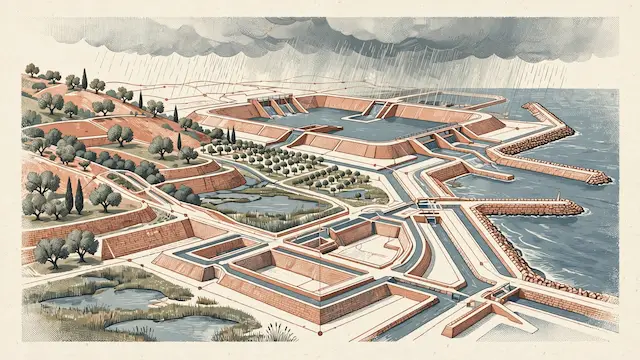
A high-level inter-ministerial committee, chaired by the Prime Minister's Office, has approved a comprehensive strategic plan to manage flood risks across Israel. The plan aims to bolster national resilience, reduce risks to life and property, and enhance the ability of authorities to respond effectively to flooding events. This initiative marks a shift from addressing floods with isolated solutions to a coordinated, long-term national management approach.
The strategy involves several key structural changes. A central government regulator will be appointed to oversee runoff management, consolidating regulation and coordination among various bodies with a regional and watershed perspective. This aims to create uniform policy, clear responsibilities, and integrated solutions across different authorities and regions, reducing current fragmentation.
Legislation will be updated to reflect current realities. The Ministry of Agriculture and Rural Development will lead the drafting of amendments to the 1957 Drainage and Flood Prevention Law. This update seeks to align the legal framework with the challenges of a dense, developing country, establishing an updated legal basis for national flood risk management. It will also promote modern planning procedures, remove obstacles, and mandate master drainage plans for local authorities.
Furthermore, dedicated funding mechanisms will be developed for drainage and runoff retention infrastructure, supporting weaker authorities in managing risks. The Ministry of National Security will lead a national emergency operational plan to clarify command chains and responsibilities during floods, improve public warning systems, and update urban flood forecasting models. The approval signifies a move from policy formulation to implementation through legislation, regulation, planning, and resource allocation, ultimately strengthening national and community resilience.
Mentioned

