
Israeli Desert Community Azuz to Become Tourist Village
Translated & summarized from Walla by baba
The Israel Land Authority has approved a plan to transform the desert community of Azuz into a tourist village, including hundreds of accommodation units and a hotel. The initiative aims to legalize existing structures and foster future development while maintaining the settlement's unique character. Established in 1983, Azuz currently comprises 18 families and hosts tourism-related businesses. The approved plan covers 800 dunams and includes residential, commercial, and tourism development, with an archaeological park also planned.
The story in 5 lines · by baba
- The Israel Land Authority approved a plan to develop the desert community of Azuz into a tourist village.
- The plan includes hundreds of accommodation units, a hotel, and commercial spaces to support tourism.
- Azuz, established in 1983, currently consists of 18 families and has existing tourism businesses.
- The development will cover approximately 800 dunams and includes residential, commercial, and tourism plots.
- An archaeological park is planned for the area in coordination with the Antiquities Authority.
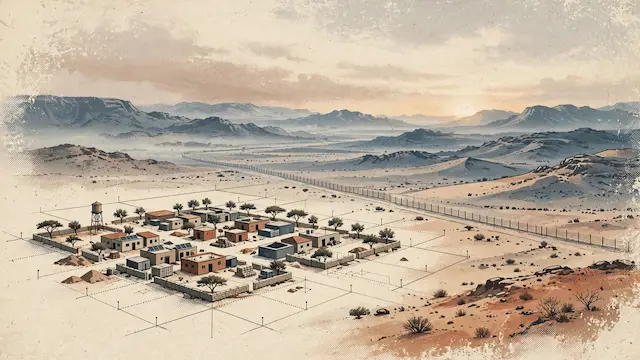
The desert community of Azuz, located near the Egyptian border and the Nitzana foothills, is set for a significant transformation. The Israel Land Authority (ILA) has approved a plan to regulate the settlement and develop it into a tourist village. The plan includes hundreds of accommodation units, a hotel, and commercial spaces to support tourism.
The initiative aims to legalize existing construction and activities while enabling future growth, preserving the settlement's isolated and unique character. The decision was made on October 14, 2026, during an ILA management meeting led by Acting Director Yehuda Eliyahu. Azuz is situated within the Ramat Negev Regional Council, approximately 12 km south of Nitzana and 3 km east of the Egyptian border.
Established in 1983 as a pastoral observation post with five families, Azuz evolved into a community with distinct characteristics. Currently, 18 families reside there, having been accepted through the Jewish Agency. The settlement hosts tourism and hospitality businesses developed by residents over the years without full planning approval, contributing to its appeal of desert tranquility and isolation.
The new plan, spanning about 800 dunams, allocates 83 residential plots for 174 housing units, alongside tourism and commercial plots for 316 vacation units. It also incorporates a hotel, sports and recreation areas, and business complexes. Existing residential and hospitality facilities will be regulated, and mixed-use plots will allow for residential use alongside tourism, workshops, cafes, restaurants, and galleries. The design considers the local topography, the nature of isolated desert tourism, and archaeological sites, with plans for an archaeological park in coordination with the Antiquities Authority.
ILA Acting Director Yehuda Eliyahu stated that regulating Azuz after years of operating without planning provides a solution for the current situation and lays the groundwork for future development. He emphasized the plan's role in strengthening local tourism and business, creating employment, and enhancing the Negev's development. Ramat Negev Regional Council Head Eran Doron welcomed the decision as important news for settlement in the region, highlighting the pioneering spirit of families who chose to build a unique community in the desert. Doron also noted the need for investment in infrastructure and services to support the growth of Negev communities.
Mentioned
The same event, reported separately by each outlet. Open a few to compare what different newsrooms emphasize — and what they leave out.
Centre 2Right 1Other 1



Not the same event — other stories that share this one’s people, places, or theme: background, reactions, and follow-ups.
